How Nonprofits Turn Business Partnerships Into Fundraising
Discover how nonprofit executives can build business-supported fundraising campaigns, inspired by Special Olympics Nevada's summer-long collaboration with California Pizza Kitchen. Explore partner selection, campaign planning, digital raffle management and practical ways to strengthen community relationships.
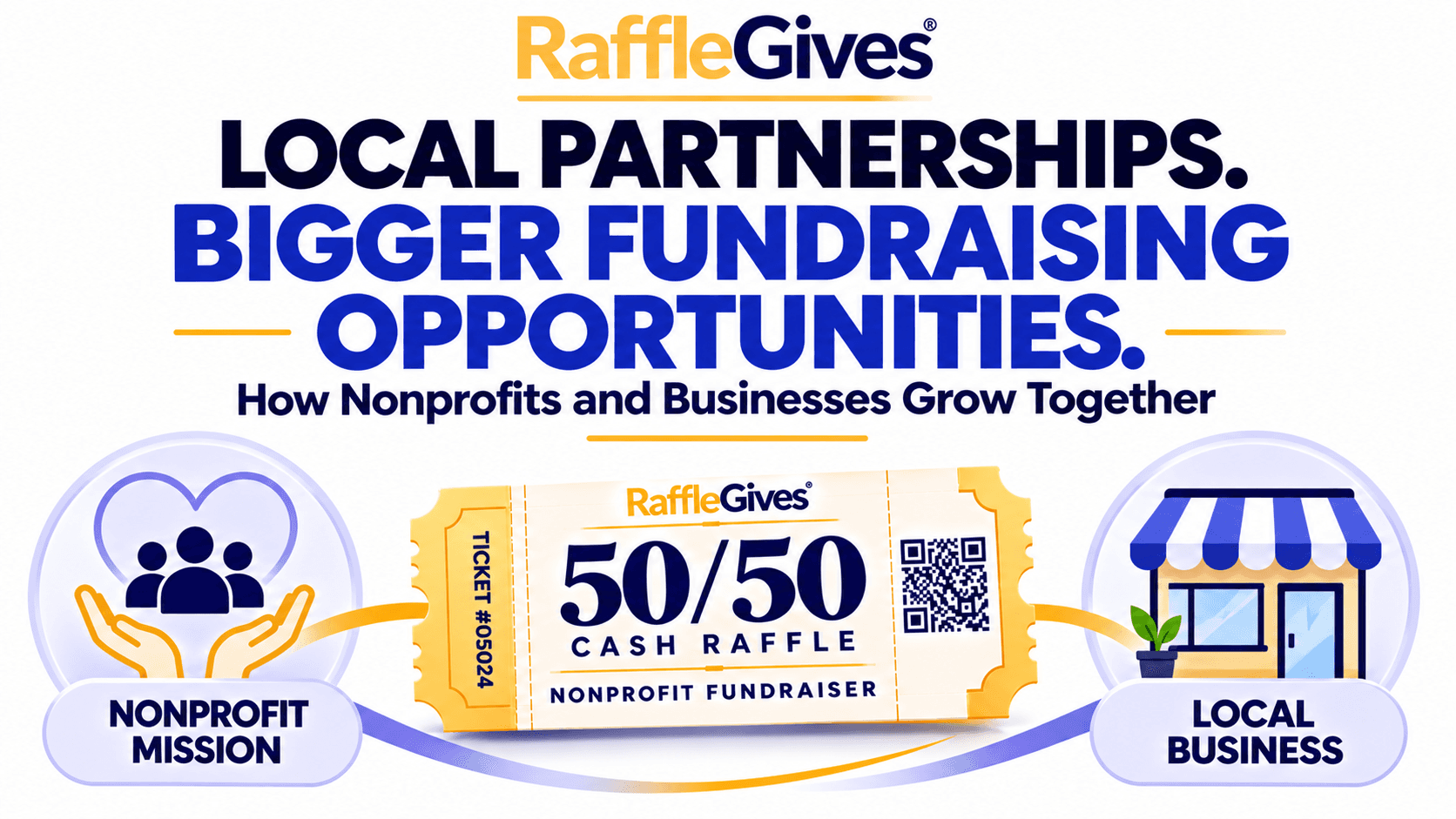
How Nonprofit Leaders Can Turn Local Business Partnerships Into Fundraising Opportunities
For nonprofit executives, one of the most valuable fundraising resources may already exist outside the organization's donor database: the businesses operating in their own community.
Restaurants, entertainment venues, retailers, professional service firms and other local businesses interact with potential supporters every day. Many of these companies also want to make meaningful contributions to the communities they serve.
The challenge is turning that shared interest into a fundraising relationship that benefits the nonprofit, creates value for the business and remains manageable for everyone involved.
Traditional sponsorships can accomplish part of that objective. However, nonprofit leaders can also explore business-supported raffle campaigns that combine an organization's charitable mission with a partner's community visibility.
Special Olympics Nevada's summer-long collaboration with California Pizza Kitchen, supported by RaffleGives, demonstrates how a nonprofit and a recognizable business can come together around a fundraising initiative.
For executive directors and development teams, the larger opportunity is not limited to one restaurant partnership. It is the possibility of developing a repeatable approach to community fundraising that builds on relationships the organization already has.
The Untapped Value of Your Nonprofit's Business Relationships
Most established nonprofits already have some form of connection to their local business community.
A restaurant may donate meals to an annual event. A retailer may provide gift baskets for an auction. A professional services firm may sponsor a golf tournament. A local entertainment venue may offer space for a charitable gathering.
These relationships are valuable, but they are often concentrated around a single donation or event.
Once the sponsorship is complete, the relationship may become inactive until the next fundraising season.
Nonprofit executives should consider whether some of these relationships could support a more consistent community engagement strategy.
A properly authorized digital raffle can be one potential component of that strategy.
Rather than asking a business only for another financial contribution, the nonprofit can propose a structured campaign that allows the company to support a charitable cause through approved promotion, community outreach or other permissible assistance.
The business contributes access to its audience and community relationships. The nonprofit provides the mission, fundraising leadership and responsibility for the charitable activity. RaffleGives supplies digital infrastructure to help administer the campaign.
When the arrangement is appropriate and legally permitted, the result is a fundraising initiative built around collaboration rather than a one-time sponsorship request.
Special Olympics Nevada and California Pizza Kitchen: A Summer-Long Fundraising Partnership
Special Olympics Nevada provides a practical example of how nonprofit fundraising can extend beyond traditional donor appeals.
The organization partnered with California Pizza Kitchen for a summer-long campaign using RaffleGives.
The initiative brought together three important elements: an established nonprofit mission, a recognizable business partner and a digital raffle platform.
Special Olympics Nevada had a charitable mission and a community of supporters. California Pizza Kitchen provided a business relationship around which a collaborative fundraising initiative could be organized. RaffleGives supported the raffle component through its platform.
The campaign demonstrates how a nonprofit can explore fundraising opportunities that do not depend exclusively on hosting a gala, securing another major gift or organizing a new standalone event.
It also illustrates the potential value of a campaign that operates over an extended period.
Why a Summer-Long Campaign Matters
A single fundraising event usually concentrates promotion and participation into a relatively short period.
A campaign running across the summer creates additional opportunities for communication and engagement. The nonprofit can introduce the campaign, reinforce its mission and maintain awareness over multiple weeks.
For a business partner, a longer campaign may provide more flexibility to coordinate appropriate messaging with existing customer communications and community activities.
The precise promotional methods used in the Special Olympics Nevada campaign should not be assumed without additional campaign records. The strategic lesson is the value of combining an extended fundraising calendar with an established business relationship.
The Importance of Mission Alignment
Special Olympics Nevada is a recognizable charitable organization with a clear community purpose.
That matters when approaching potential business partners.
Businesses are more likely to understand a proposed collaboration when the nonprofit can explain whom it serves, why the work matters and what the partnership is intended to accomplish.
A strong mission gives the campaign a reason to exist beyond the raffle itself.
The raffle is the fundraising mechanism. The nonprofit's work is the reason supporters are being invited to participate.
What Executives Can Take From This Example
The Special Olympics Nevada and California Pizza Kitchen collaboration illustrates a model that other nonprofit leaders can evaluate at a scale appropriate to their organizations.
A regional charity might explore a partnership with a restaurant group. A youth development nonprofit might approach a family entertainment business. A veterans organization might work with an established local employer.
The size of the business is not necessarily the determining factor.
What matters is whether the relationship is appropriate, the audiences are compatible, the charitable purpose is clear and the proposed activities comply with applicable law.
Executive takeaway: Your nonprofit's next fundraising opportunity may come from expanding an existing business relationship rather than acquiring an entirely new donor audience.
Why Business-Supported Raffles Can Be Attractive to Nonprofit Leadership
A business partnership should be evaluated as more than a promotional tactic.
For nonprofit executives, it can potentially address several challenges that affect fundraising performance.
1. Reaching People Outside the Existing Donor Database
Many nonprofits repeatedly communicate with the same group of supporters.
Those relationships are important, but an organization that depends entirely on its existing donor list may struggle to introduce its mission to new people.
A business partner can create an additional point of discovery.
For example, someone who follows a local restaurant on social media may encounter information about a charitable campaign supporting an organization they have never previously considered.
That introduction does not guarantee participation or future donations. However, it creates an opportunity for the nonprofit to communicate its mission to a different audience.
The long-term value comes from building appropriate relationships with interested supporters, not simply generating a one-time transaction.
2. Creating More Value From Existing Sponsorship Relationships
Businesses already supporting a nonprofit may be receptive to new ways of participating.
Instead of approaching every sponsor with the same annual request, development teams can present a different type of collaboration.
A business might help distribute approved campaign information, provide space for an awareness event or introduce the nonprofit to additional community contacts.
The arrangement should be documented and should not involve unauthorized ticket sales, prohibited compensation or inappropriate commercial control over the raffle.
This creates an opportunity to broaden the relationship while keeping the charitable purpose central.
3. Reducing Dependence on Large Events
Galas, auctions and tournaments can generate meaningful support, but they require substantial planning and resources.
A standalone raffle campaign supported by a business partner may offer another option for qualifying nonprofits.
The organization still needs campaign oversight, legal authorization, communications and financial accountability. However, it may not need to organize an entirely new physical event to create the fundraising opportunity.
That distinction can matter for smaller development teams.
4. Strengthening Community Recognition
A business-supported campaign can also introduce the nonprofit's work to people who are familiar with the business but unfamiliar with the charity.
This is particularly relevant for organizations that provide important services but have limited marketing budgets.
The nonprofit should ensure that campaign communications explain its mission clearly and accurately.
Participants should understand which organization conducts the raffle, which cause benefits and what role the business partner plays.
5. Building Relationships That Can Continue
A successful partnership does not have to end when the drawing concludes.
The nonprofit and business can review the experience, discuss lessons learned and determine whether another collaboration would be appropriate.
Future activities might involve volunteer programs, awareness events, sponsorships or additional authorized fundraising campaigns.
The objective is to build a relationship that remains valuable even when no raffle is active.
Five Types of Local Businesses Worth Approaching
Not every business is an appropriate partner for every nonprofit.
The strongest prospects usually have a connection to the organization's mission, community or supporter audience.
Business Type | Potential Partnership Contribution | Nonprofit Opportunity |
|---|---|---|
Restaurants and cafés | Approved customer communications and community awareness | Introduce the mission to local patrons |
Entertainment venues | Event visibility and community promotion | Reach families and event attendees |
Retail businesses | Storefront awareness and permitted campaign sharing | Connect with neighborhood customers |
Professional services firms | Employee engagement and professional networks | Build relationships with local employers |
Sports and recreation businesses | Community events and audience outreach | Engage participants, families and supporters |
These are possible partnership categories, not guarantees that every promotional activity is lawful. The nonprofit must review restrictions on business participation, raffle promotion, ticket sales and compensation.
Restaurants and Hospitality Businesses
Restaurants frequently participate in community fundraising because they have established customer relationships and recognizable local brands.
A nonprofit can explore whether a restaurant is interested in supporting an authorized campaign through appropriate awareness and outreach.
The Special Olympics Nevada and California Pizza Kitchen collaboration illustrates the relevance of this category.
Entertainment and Recreation Venues
Family entertainment centers, recreational facilities and community venues often attract audiences that overlap with youth organizations, schools and family-serving charities.
These relationships may create opportunities for awareness campaigns, fundraising events or authorized raffle promotion.
Retail Businesses
Local retailers can be valuable community partners, especially when they have strong neighborhood recognition.
Their involvement might center on promoting a charitable cause through approved communications or helping organize a community awareness activity.
Professional Services Firms
Accounting firms, real estate companies, law firms and other professional organizations often maintain community engagement or corporate social responsibility initiatives.
A nonprofit can explore partnerships that involve employee awareness, volunteer participation or appropriate campaign support.
Sports and Recreation Organizations
Sports organizations can bring together enthusiastic audiences and established community networks.
Las Vegas Lights FC's use of RaffleGives to support local nonprofits illustrates another form of community-connected fundraising.
For nonprofit leaders, the common principle is to identify organizations whose existing relationships could help bring greater attention to a charitable mission.
How to Approach a Local Business About a Fundraising Partnership
One of the most common mistakes nonprofits make is beginning a partnership conversation with a financial request.
That approach may work for traditional sponsorships, but a collaborative campaign requires a different discussion.
The nonprofit should begin with shared community value.
Start With the Business's Community Interests
Before contacting a prospective partner, research its existing charitable activities, customer base and local involvement.
A restaurant known for supporting schools may be a strong prospect for a youth-serving nonprofit. A recreation business may have natural alignment with organizations promoting health, athletics or family programs.
The objective is to identify an authentic connection.
Present a Specific Opportunity
Business owners and managers are more likely to evaluate a proposal when they understand what is being requested.
Rather than asking whether they would like to help with fundraising, explain the proposed campaign, anticipated schedule, intended audience and requested role.
For example, a nonprofit could propose a four-week charitable raffle campaign in which the business helps share approved campaign information with its community.
The proposal should clearly state that the nonprofit remains responsible for the raffle and that all promotional activities are subject to legal review.
Explain What the Business Gains
A partnership should create legitimate value for both organizations.
For the business, potential benefits include community recognition, association with a meaningful charitable initiative and opportunities to engage employees or customers around a shared cause.
These benefits should not be represented as guaranteed increases in sales, foot traffic or customer loyalty.
The value proposition is community participation and goodwill, not a promised commercial return.
Make the Responsibilities Clear
A business should understand what it is expected to do and what it is not expected to do.
The nonprofit should identify who owns the raffle, who handles funds, who approves communications, who manages participant questions and who conducts the drawing.
Clear responsibilities protect both parties and help prevent operational confusion.
Who Should Own and Operate the Raffle?
This is one of the most important distinctions in a business-supported charitable raffle.
The nonprofit, not the commercial partner, should be the legally authorized raffle operator unless the applicable law expressly provides otherwise.
The business may participate in approved promotional or support activities, but that does not automatically authorize it to sell raffle tickets, collect payments, conduct drawings or receive compensation connected to raffle proceeds.
State laws can impose significant restrictions on commercial involvement in charitable gaming.
A written partnership agreement should address the parties' roles, promotional permissions, use of names and logos, handling of participant information, financial responsibilities and termination procedures.
The nonprofit should also confirm that the business relationship does not violate charitable gaming rules governing paid promoters, third-party vendors, commercial fundraising or compensation.
RaffleGives provides technology, but the platform does not replace the nonprofit's responsibility for obtaining the necessary legal approvals.
A Practical 30-Day Business Partnership Launch Plan
A simple campaign framework can help leadership evaluate whether the opportunity is manageable.
The following schedule is illustrative. Required licensing or approval periods may extend beyond 30 days.
Week 1: Identify the Opportunity
Select the charitable objective and identify prospective business partners.
Review the organization's eligibility to conduct the proposed raffle, including cash-prize rules, electronic ticketing restrictions and any required permits.
Prepare a short partnership proposal that explains the mission, campaign concept, requested business involvement and anticipated responsibilities.
Do not begin ticket sales or public promotion before the necessary legal requirements are satisfied.
Week 2: Establish the Partnership
Meet with the prospective partner and agree on the campaign's purpose, schedule and permitted activities.
Document the nonprofit's control over the raffle and establish a process for approving promotional materials.
Determine which communication channels may be used and who is responsible for each activity.
Week 3: Prepare the Campaign
Create the RaffleGives campaign page, confirm the official rules and connect the nonprofit's payment processing account where authorized.
Prepare approved graphics, emails, QR codes and social media materials.
Assign a campaign owner and ensure that staff and business representatives understand the approved participation process.
Week 4: Launch and Coordinate Promotion
Begin the authorized campaign and coordinate communication between the nonprofit and business partner.
Share information about the charitable mission, the campaign's official rules and the applicable participation deadlines.
Monitor campaign activity and address supporter questions promptly.
At the conclusion of the campaign, conduct the drawing according to the approved procedures, fulfill prize obligations and complete any required reporting.

How RaffleGives Supports Business Partnership Campaigns
A business-supported campaign requires coordination between organizations that may have different systems, staff and communication practices.
RaffleGives provides a centralized digital platform intended to simplify the nonprofit's raffle administration.
Branded Campaign Pages
The nonprofit can create a dedicated campaign page that communicates its mission, fundraising purpose and raffle information.
This provides a consistent destination for approved outreach.
Digital Ticketing
Where permitted by law, eligible participants can purchase tickets through the platform.
The nonprofit does not have to rely exclusively on paper-ticket distribution and manual recordkeeping.
Nonprofit-Controlled Payment Processing
Each nonprofit connects its own Stripe account. RaffleGives does not take custody of the nonprofit's raffle funds.
This separation is particularly important when a commercial business participates in the campaign.
Sharing Tools and QR Codes
Campaign links and QR codes can support approved communications through the nonprofit's own channels and authorized business-partner outreach.
The organization should confirm that each proposed method of promotion and sale is permitted.
Campaign Reporting
Centralized ticket tracking and reporting help nonprofit leadership monitor campaign activity.
These records can also support internal reviews and post-campaign discussions with the business partner.
Automated Winner Selection
RaffleGives provides winner-selection functionality to support campaign administration.
The nonprofit remains responsible for ensuring the drawing procedure satisfies applicable law and the campaign's official rules.
No Monthly Software Subscription
RaffleGives does not charge an upfront platform fee or monthly subscription.
Its standard platform fee is 8% of gross ticket sales, with payment processing charges separate.
This pricing model allows organizations to evaluate the platform without committing to an ongoing subscription, although legal, administrative and other campaign expenses must still be considered.
How Nonprofit Executives Should Evaluate a Partnership Campaign
Before approving a business-supported raffle, leadership should consider more than potential ticket sales.
A useful evaluation framework includes five questions.
Is the partnership aligned with our mission?
The relationship should make sense to the nonprofit's supporters and the business's community.
Does the proposed campaign comply with applicable law?
The organization must confirm its eligibility, the permitted raffle structure and the commercial partner's allowable role.
Do we have a clear operational owner?
One person should be responsible for coordinating the campaign, maintaining records and communicating with the business partner.
Can we explain the financial model?
Leadership should understand platform fees, payment processing, prize obligations, permitted expenses and the nonprofit's expected share.
Will the relationship create value beyond the drawing?
The nonprofit should consider whether the campaign introduces its mission to new people, strengthens an existing business relationship or creates opportunities for future collaboration.
These questions help determine whether a campaign is strategically worthwhile rather than simply possible.
What Happens After the Raffle Ends?
A partnership campaign should conclude with more than a winner announcement.
The nonprofit should thank the business partner, fulfill any agreed recognition obligations and review the campaign's operational results.
Leadership can assess which communications were effective, whether the partnership responsibilities were manageable and what improvements would be appropriate for a future campaign.
The organization should also consider how to communicate with participants who expressed an interest in learning more about its mission.
Any follow-up must respect privacy requirements and the permissions participants actually provided. Purchasing a raffle ticket should not automatically be treated as consent to unrelated marketing communications.
For a deeper discussion, see How to Turn Raffle Participants Into Long-Term Nonprofit Supporters.
The goal is to preserve the relationships created through the campaign.
Frequently Asked Questions
Can a nonprofit partner with a restaurant to run a raffle?
Potentially. A qualifying nonprofit may collaborate with a restaurant or another business where the raffle and the proposed business activities are legally permitted. The nonprofit should confirm its eligibility and the commercial partner's authorized role before proceeding.
Does the business need to contribute money?
Not necessarily. A partnership may involve approved promotion, community awareness, employee engagement or other support. The parties should define the arrangement clearly and verify that it complies with applicable charitable gaming rules.
Can a business sell raffle tickets on behalf of a nonprofit?
Not automatically. Some jurisdictions restrict who may sell charitable raffle tickets or prohibit certain forms of commercial involvement. The nonprofit must verify the rules before allowing a business or its employees to handle ticket sales.
Can businesses promote raffle links on social media?
That depends on applicable law, the approved raffle structure and any relevant advertising-platform policies. A business should use only approved promotional materials and permitted channels.
Can a nonprofit run a business-supported raffle without hosting an event?
Yes, where standalone raffles and the proposed sales methods are authorized. A physical event is not always required, but the nonprofit must satisfy the relevant legal requirements.
How does RaffleGives charge nonprofits?
RaffleGives has no upfront platform fee or monthly subscription. Its standard platform fee is 8% of gross ticket sales, with payment processing charges separate.
Can the same business support multiple raffle campaigns?
Potentially. Recurring partnerships may be possible, but the nonprofit must confirm any restrictions on raffle frequency, licenses, prize amounts and promotional activities.
Your Next Business Partnership Could Become a New Fundraising Opportunity
Special Olympics Nevada's summer-long campaign with California Pizza Kitchen illustrates an important lesson for nonprofit executives.
Fundraising opportunities do not always require a new event, a larger advertising budget or an entirely new donor acquisition strategy.
Sometimes, they begin with a business relationship and a shared interest in supporting the community.
For nonprofits with established local connections, a properly structured raffle can provide another way to bring those relationships together around a charitable purpose.
The opportunity is not limited to national organizations or recognizable restaurant brands.
A neighborhood nonprofit and a local business can explore the same underlying approach at a scale that fits their resources, provided the raffle structure and partnership activities are legally authorized.
The first step is to identify the businesses that already believe in your mission and begin a conversation about what you could accomplish together.
Turn Local Business Relationships Into Fundraising Opportunities
Your nonprofit already has a mission worth supporting. The right business partnership can help introduce that mission to more people.
RaffleGives helps qualifying nonprofits organize digital raffle campaigns, engage community partners and manage fundraising without upfront platform fees or monthly subscriptions.
Explore how a business-supported raffle could fit your organization's fundraising strategy.
Start Fundraising With RaffleGives
Related Reading
- How Nonprofits and Local Businesses Boost Raffles Together
- How to Turn Raffle Participants Into Long-Term Nonprofit Supporters
- How to Build a 30-Day Marketing Plan for an Online 50/50 Raffle
- How to Launch Your First Online 50/50 Raffle
- Explore RaffleGives Business Partnership Solutions
Follow RaffleGives for nonprofit fundraising strategies, business partnership ideas and charitable gaming updates.
Raffle availability, online ticket sales, cash prizes, commercial participation and drawing procedures depend on applicable law. This article is educational and does not constitute legal or tax advice.