Turn Raffle Participants Into Nonprofit Supporters | RaffleGives
A raffle can do more than raise money during a single campaign. Learn how nonprofits can use raffle participation to introduce new people to their mission, build stronger relationships and create opportunities for long-term engagement.
How to Turn Raffle Participants Into Long-Term Nonprofit Supporters
A successful raffle can raise money for a nonprofit in a matter of weeks. But the value of the campaign does not necessarily end when the winning ticket is drawn.
Every raffle participant represents a new interaction with the organization. Some may already be donors, volunteers or longtime supporters, but others may be encountering the nonprofit for the first time because a friend shared the campaign, a family member became an Ambassador, or the growing prize caught their attention.
That distinction creates an important opportunity. Instead of measuring a raffle only by gross ticket sales, nonprofits can also consider whether the campaign is expanding the number of people who know about their mission and creating new relationships that can continue after the raffle ends.
A raffle can raise money today while helping build the audience that supports the organization tomorrow.
Quick Answer: Can Raffles Help Nonprofits Find New Supporters?
Yes. A raffle can introduce a nonprofit to people who might never have responded to a traditional donation request, particularly when the campaign is distributed through supporters, volunteers, families, teams and community partners.
The initial interaction may be a raffle ticket purchase rather than a charitable contribution, and nonprofits should preserve that distinction. The IRS generally does not treat the purchase of a raffle ticket as a deductible charitable contribution because the purchaser receives a chance to win something in return.
From a relationship perspective, however, the transaction can still be meaningful. Someone has discovered the organization, interacted with its campaign and chosen to participate in an activity benefiting its mission.
The nonprofit's next opportunity is to give that person a reason to stay connected.
A Raffle Participant Is Not Necessarily the Same as a Donor
This distinction matters.
Traditional nonprofit fundraising often begins with the mission. The organization explains the need, asks someone to contribute and relies on that person's desire to support the cause.
A raffle introduces another reason to participate. Where legally permitted, a supporter purchases a chance to win a prize while helping generate proceeds for the organization.
That means some participants may enter the campaign primarily because they already support the nonprofit, while others may initially be attracted by the raffle itself. Both can be valuable, but the organization should not assume that every ticket purchaser automatically becomes a traditional donor.
The raffle creates the introduction. Stewardship determines what happens next.
Why Can Raffles Reach Beyond the Traditional Donor Base?
Nonprofits spend significant time trying to expand their fundraising audience. Email acquisition, events, social media, advertising, partnerships and peer-to-peer campaigns are all designed, in part, to introduce the organization to more people.
A digital raffle can create another pathway.
Imagine a longtime supporter shares a raffle with ten coworkers. Several purchase tickets even though they have never previously donated to the organization. Those participants may have entered because they know and trust the person who shared the campaign rather than because they were already familiar with the nonprofit.
The organization has now reached people outside its existing donor database through a relationship it did not have to create itself.
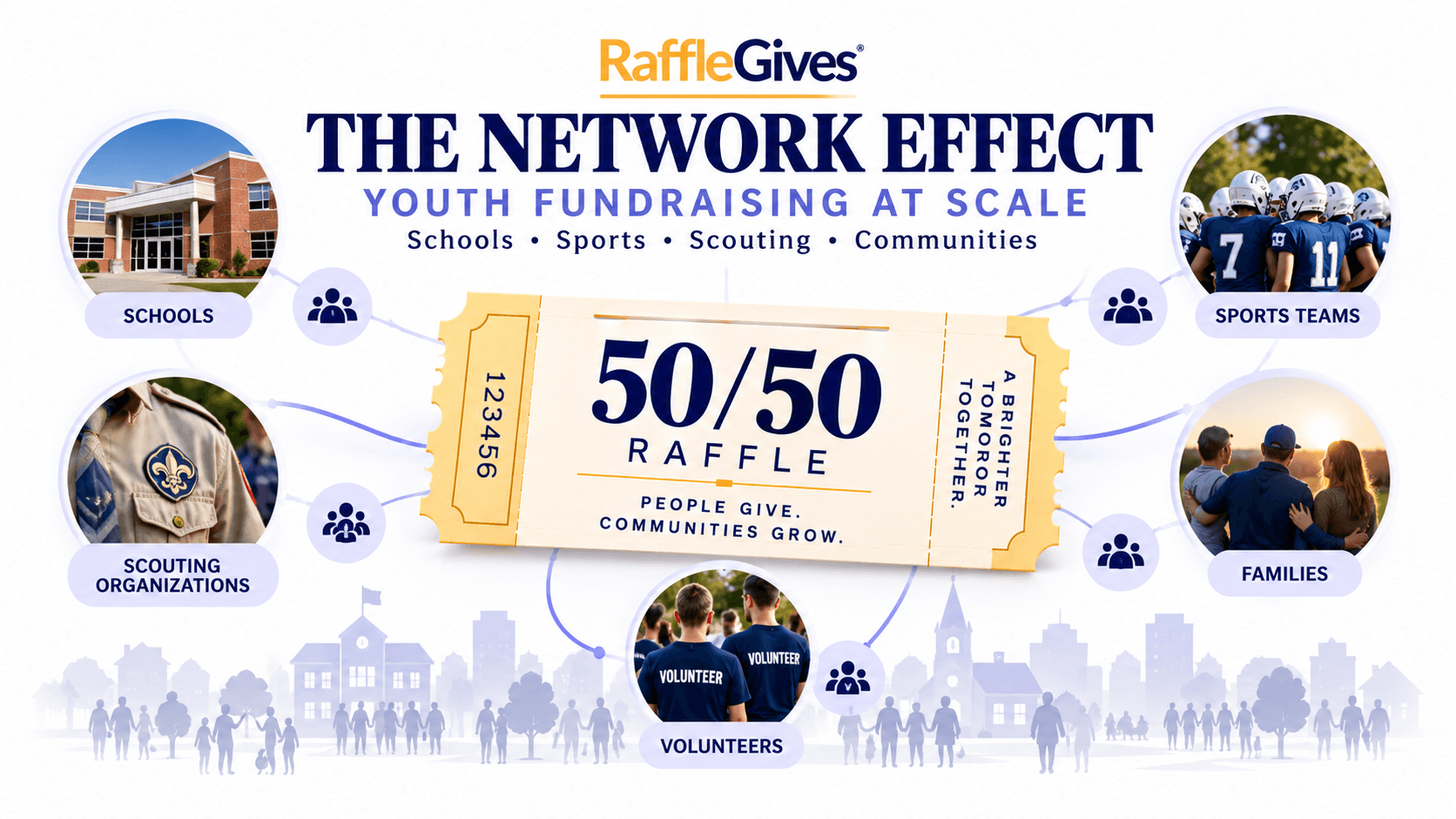
This becomes even more powerful when the campaign uses a distributed model. As we explain in our guide to the network effect in youth fundraising, families, volunteers, teams and other Ambassadors can connect one campaign to thousands of relationships beyond the organization's existing audience.
The same principle can apply well beyond youth organizations.
The Raffle Should Be Viewed as the Beginning of a Relationship
A common fundraising mistake is treating campaign completion as the end of communication.
The fundraiser closes, the winner is announced, the proceeds are calculated, and the organization moves on to its next initiative. Participants who entered the organization's ecosystem during the campaign may never hear a meaningful message from it again.
That leaves significant relationship value unused.
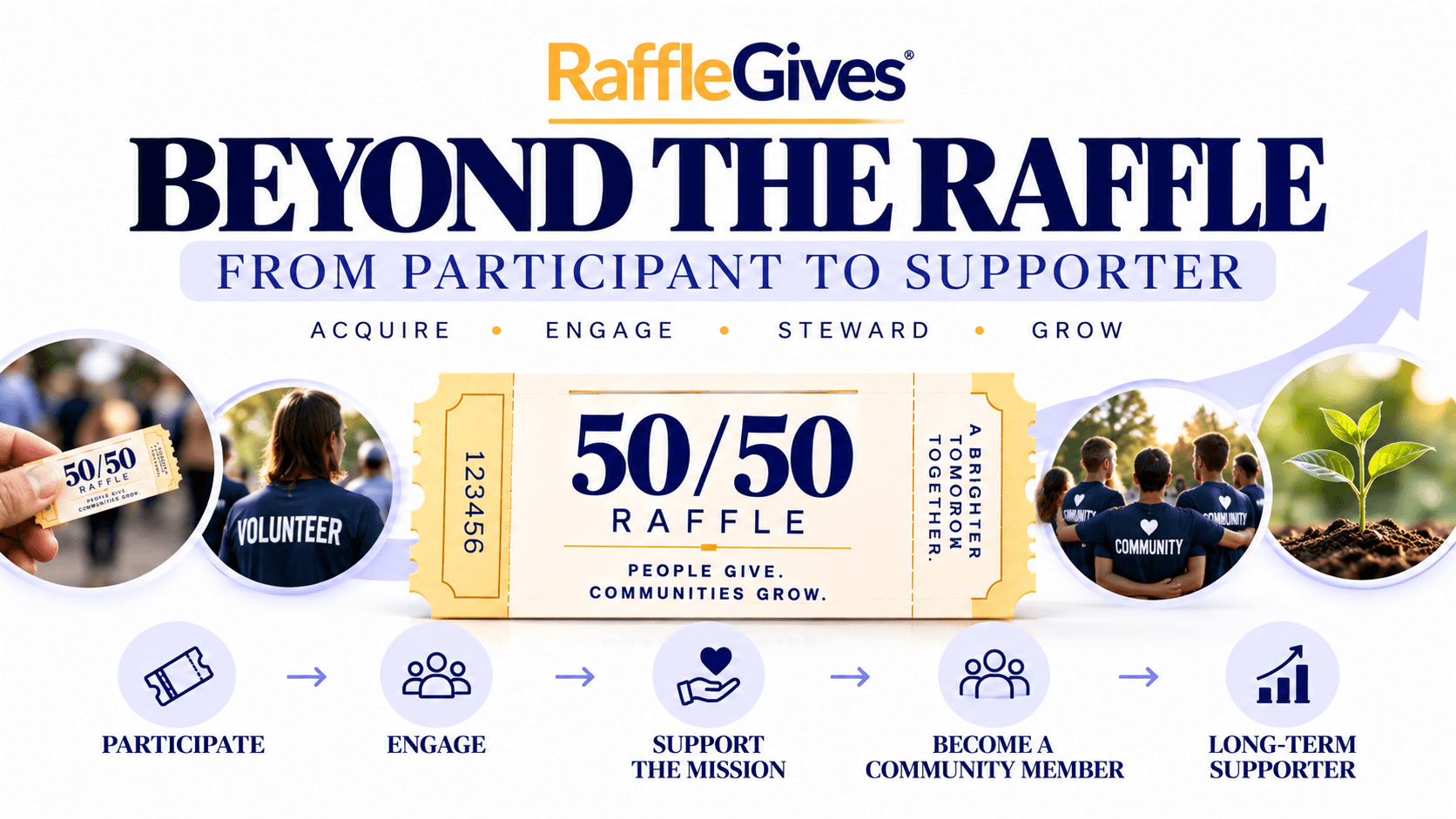
Instead, nonprofits can think about the raffle as the first stage of a supporter journey. The person may begin as a raffle participant, become interested in the organization's work, follow the nonprofit online, attend an event, volunteer, participate in another campaign and eventually become a traditional donor.
Not every participant will follow that path, and organizations should not expect them to. The objective is to create opportunities for the relationship to continue.
What Does the Raffle Supporter Journey Look Like?
A simple supporter journey might look like this:
DISCOVERY → PARTICIPATION → MISSION EXPOSURE → FOLLOW-UP → ENGAGEMENT → LONG-TERM SUPPORT
Discovery may happen through an Ambassador, social post, QR code, email, event or community partner. Participation occurs when the individual enters the raffle.
Mission exposure should occur throughout the campaign rather than waiting until the end. The participant should understand who benefits from the fundraiser and what the organization is trying to accomplish.
Follow-up begins after participation. Instead of communicating only transactional information, the organization can continue telling its story and inviting supporters into appropriate next steps.
Over time, some participants may become increasingly engaged with the mission.
That is how a fundraising transaction can begin becoming a supporter relationship.

Mission Communication Should Begin Before the Drawing
Supporter development should not suddenly begin after the raffle closes.
The campaign itself should consistently explain why the organization is raising money. A supporter attracted by the potential prize should also encounter the mission behind the fundraiser.
Instead of promoting only the jackpot, nonprofits can communicate what the proceeds help accomplish. A school might explain the programs being funded. A youth sports organization might describe how fundraising supports equipment, travel or participation. A food assistance organization might connect campaign progress to the number of families its programs serve.
This does not mean burying the raffle beneath a long institutional message. It means ensuring the supporter understands that there is a real mission behind the ticket.
The prize attracts attention. The mission gives the interaction meaning.
What Should a Nonprofit Send After Someone Participates?
The first communications should support the raffle experience itself. Participants need appropriate transaction confirmation, campaign information, drawing details and winner communication.
But organizations can also consider how mission-oriented communication fits into the relationship, subject to applicable marketing, privacy and consent requirements.
A campaign update might explain what the organization is working toward. A milestone message could connect fundraising progress to the program being supported. A winner announcement can celebrate the participant while also thanking the broader community for what the campaign made possible.
The key is relevance.
Someone who purchased a raffle ticket should not immediately be treated as though they requested an endless stream of fundraising solicitations. The organization should earn the next interaction by making its communications useful and connected to the reason the person originally participated.
Tell Participants What Their Participation Made Possible
One of the strongest post-campaign messages is also one of the simplest:
Show the impact.
If the raffle funded a particular program, tell participants what happened. If proceeds supported uniforms, meals, scholarships, medical programs, community services or another initiative, explain the result when appropriate.
This closes the loop between participation and mission.
A person may have initially entered because a friend shared the raffle or because the prize was attractive. Seeing what the organization accomplished can give that participant another reason to care.
The nonprofit is no longer simply the organization that ran the raffle. It becomes the organization that used the campaign to accomplish something meaningful.
Give People More Than One Way to Stay Involved
The next action should not always be another financial ask.
Some supporters may want to follow the organization on social media. Others may subscribe to a newsletter, attend an event, volunteer, share another campaign or learn more about a specific program.
Creating multiple pathways into the organization can make supporter development more natural.
Someone who is not ready to become a recurring donor may still become a volunteer. A raffle participant who does not respond to a donation appeal might enthusiastically share the next fundraiser. Someone introduced through a school or sports organization may later attend an event.
Long-term supporter value is not measured only by the next transaction.
It is measured by the relationship.
Why the Ambassador Program Can Make Supporter Acquisition More Powerful
The RaffleGives Ambassador Program can expand this effect because it allows a campaign to travel through existing relationships.
An organization might have 1,000 people in its database, but those supporters collectively know many thousands more. Giving supporters trackable campaign pathways allows them to introduce the fundraiser to people outside the nonprofit's immediate reach.
This changes the acquisition model.
The organization does not have to purchase every introduction through advertising. Supporters can create introductions through their own networks.
A parent can share with coworkers. A board member can share with professional contacts. A volunteer can share with friends. A team can distribute the campaign throughout its community.
Each pathway potentially brings new people into contact with the nonprofit.
Our recent article on scaling youth fundraising through the network effect explores this model in detail for schools, sports organizations and Scouting groups. The underlying principle, however, can apply to many nonprofits with engaged communities.
Can Raffle Participants Become Future Donors?
Some can, but nonprofits should avoid assuming that a raffle purchaser and a charitable donor are interchangeable.
The initial motivations may be different. A traditional donor may contribute primarily because of the mission, while a raffle participant may be motivated by some combination of the cause, the person who shared the campaign and the chance to win.
The objective of post-raffle stewardship is therefore not to relabel every participant as a donor. It is to introduce participants to the mission and allow stronger relationships to develop over time.
For some people, the raffle may remain their preferred way to support the organization. Others may eventually respond to direct appeals, volunteer opportunities, events or recurring-giving programs.
Both outcomes can have value.
Why First-Party Relationships Matter
Digital fundraising increasingly depends on an organization's ability to maintain direct relationships with its supporters.
Social media platforms can change algorithms. Advertising costs can rise. Search behavior changes. Third-party audiences remain valuable, but organizations do not fully control access to them.
A supporter who intentionally establishes an appropriate direct relationship with the nonprofit is different. The organization can continue communicating through permitted channels without depending entirely on another platform to reconnect them.
That makes supporter acquisition strategically valuable beyond the revenue from a single campaign.
RaffleGives is built around nonprofit-controlled campaigns and Stripe-connected payment infrastructure rather than requiring the nonprofit to hand its fundraising operation over to a generic giveaway system. The goal is not merely to process raffle entries. It is to help nonprofits add digital raffles to a broader fundraising strategy.
How Should Nonprofits Measure a Raffle Beyond Revenue?
Gross ticket sales will always be an important campaign metric, but it does not have to be the only one.
Organizations can also evaluate how many people participated, how many were new to the organization, which campaign channels generated participation and how effectively Ambassadors expanded campaign reach.
Post-campaign metrics can become even more interesting. How many participants chose to remain connected? How many later attended an event, volunteered, participated in another campaign or became traditional donors?
Those measurements help the organization understand whether the raffle created only short-term revenue or also expanded its broader supporter ecosystem.
A $20,000 raffle that introduces hundreds of new people to the mission may have a different long-term value than the campaign total alone suggests.
Should Nonprofits Immediately Ask Raffle Participants for Another Donation?
Usually, the stronger approach is to build context before making another financial request.
A participant has just completed one transaction with the organization. Immediately following it with another request for money can make the relationship feel purely transactional.
Instead, organizations can first reinforce the connection between the campaign and the mission. Thank participants, communicate legitimate campaign updates, show what the fundraiser supports and provide ways to learn more about the organization.
Future fundraising opportunities can then appear within an established relationship rather than as an immediate second ask.
This is stewardship rather than simply remarketing.
What About Email and Marketing Consent?
Nonprofits should treat marketing consent, privacy and communication preferences seriously.
Purchasing a raffle ticket does not automatically mean an individual has agreed to every possible future marketing communication. Organizations should follow applicable laws, platform requirements and their own privacy policies when determining how participant information can be used.
A good supporter-acquisition strategy does not depend on hiding consent or making participation conditional on unrelated marketing.
Instead, give people clear opportunities to remain connected.
An interested supporter who voluntarily chooses to follow the organization, subscribe to appropriate communications or engage again is generally more valuable than someone who feels trapped in a marketing funnel.
Why Repeat Raffles Can Strengthen the Relationship
For organizations legally able to conduct recurring raffles, the next raffle itself can become another engagement opportunity.
A participant who enjoyed the first campaign already understands how the format works. If the experience was simple, transparent and connected to a mission they value, that person may be more willing to participate again.
Recurring campaigns can therefore build familiarity over time.
They can also create recurring opportunities to communicate impact. Each campaign supports another organizational objective, introduces new participants and reconnects previous supporters with the mission.
The raffle becomes one component of the organization's fundraising calendar rather than a one-time experiment.
How RaffleGives Fits Into the Supporter Journey
RaffleGives is a self-service digital raffle platform built specifically for nonprofit organizations conducting legal cash and 50/50 raffles.
The platform combines branded raffle pages, customizable ticket pricing, Stripe-powered payments, real-time tracking, automated receipts, winner workflows, social and QR sharing tools and the Ambassador Program. There is no monthly subscription, no upfront platform fee and no long-term commitment. RaffleGives' standard platform fee is 8% of ticket sales. RaffleGives
Those features matter operationally, but the larger opportunity is strategic.
The raffle can attract participation. Ambassadors can expand distribution. Digital infrastructure can reduce administrative work. The nonprofit can then concentrate on the part technology cannot automate: building meaningful relationships around its mission.
For organizations exploring the platform itself, our RaffleGives online raffle platform guide explains how the system works.
Raffles Should Complement the Fundraising Stack
Raffles are not a replacement for major gifts, grants, recurring donations, corporate partnerships, events or other established fundraising programs.
They can complement them.
A nonprofit may have supporters who respond strongly to traditional appeals and others who prefer events. Some people may volunteer before they ever donate. Others may first discover the organization through a raffle shared by someone they know.
Giving people multiple ways to engage creates more entry points into the mission.
That is why the strategic value of a raffle can extend beyond its closing total.
The Drawing Ends. The Relationship Doesn't Have To.
The most visible moment of a raffle is the drawing. A winner is selected, the prize is awarded and the fundraising result becomes final.
For the nonprofit, however, another process can be beginning.
Every new participant has now encountered the organization. Some will move on, while others may be interested in learning more, following the mission or participating again.
The nonprofit's job is not to force every raffle participant into becoming a donor. It is to make the next step worth taking.
When that happens, a digital raffle becomes more than a fundraising campaign.
It becomes another way to grow the community surrounding the mission.
Frequently Asked Questions
Are raffle ticket purchasers considered donors?
Not automatically. A raffle ticket purchase generally involves receiving a chance to win something in return and is different from a traditional charitable contribution. Nonprofits should maintain that distinction in their fundraising and tax communications.
Are raffle ticket purchases tax deductible?
Generally, no. The IRS states that amounts paid for raffle, bingo or lottery tickets are not deductible as charitable contributions because the purchaser receives the opportunity to win a prize in return.
Can raffle participants become future donors?
Yes, some may. A raffle can introduce people to an organization who were not previously donors, giving the nonprofit an opportunity to build a relationship through mission communication, impact reporting and future engagement.
Should nonprofits add every raffle participant to their marketing email list?
Organizations should follow applicable privacy, consent and marketing requirements rather than assuming a raffle purchase grants unlimited permission for unrelated communications. Providing clear ways for interested participants to stay connected is the stronger long-term approach.
Can Ambassadors help a nonprofit reach new supporters?
Yes. Ambassadors can distribute a campaign through personal, professional and community networks that the organization may not otherwise reach directly.
Should nonprofits run more than one raffle?
Where recurring raffles are permitted by applicable law and fit the organization's fundraising strategy, repeat campaigns can provide additional fundraising and engagement opportunities. Organizations should verify state and local requirements before establishing a recurring program.
How can nonprofits tell whether raffle participants are becoming long-term supporters?
Organizations can evaluate more than ticket revenue. Metrics may include new participants, Ambassador-generated participation, subsequent campaign engagement, newsletter opt-ins, event attendance, volunteering and future giving where those activities are appropriately tracked.
Related Reading
Organizations looking to expand the top of the supporter funnel should read The Network Effect in Youth Fundraising, which explains how families, volunteers, teams and organizational groups can expand one campaign through their existing relationships.
For organizations evaluating whether digital ticket sales are permitted, Can Nonprofits Sell Raffle Tickets Online? explains the distinction between general raffle legality and online sales. Before publishing, verify that URL slug against the live page because I will not invent or assume a canonical URL if the final published slug differs.
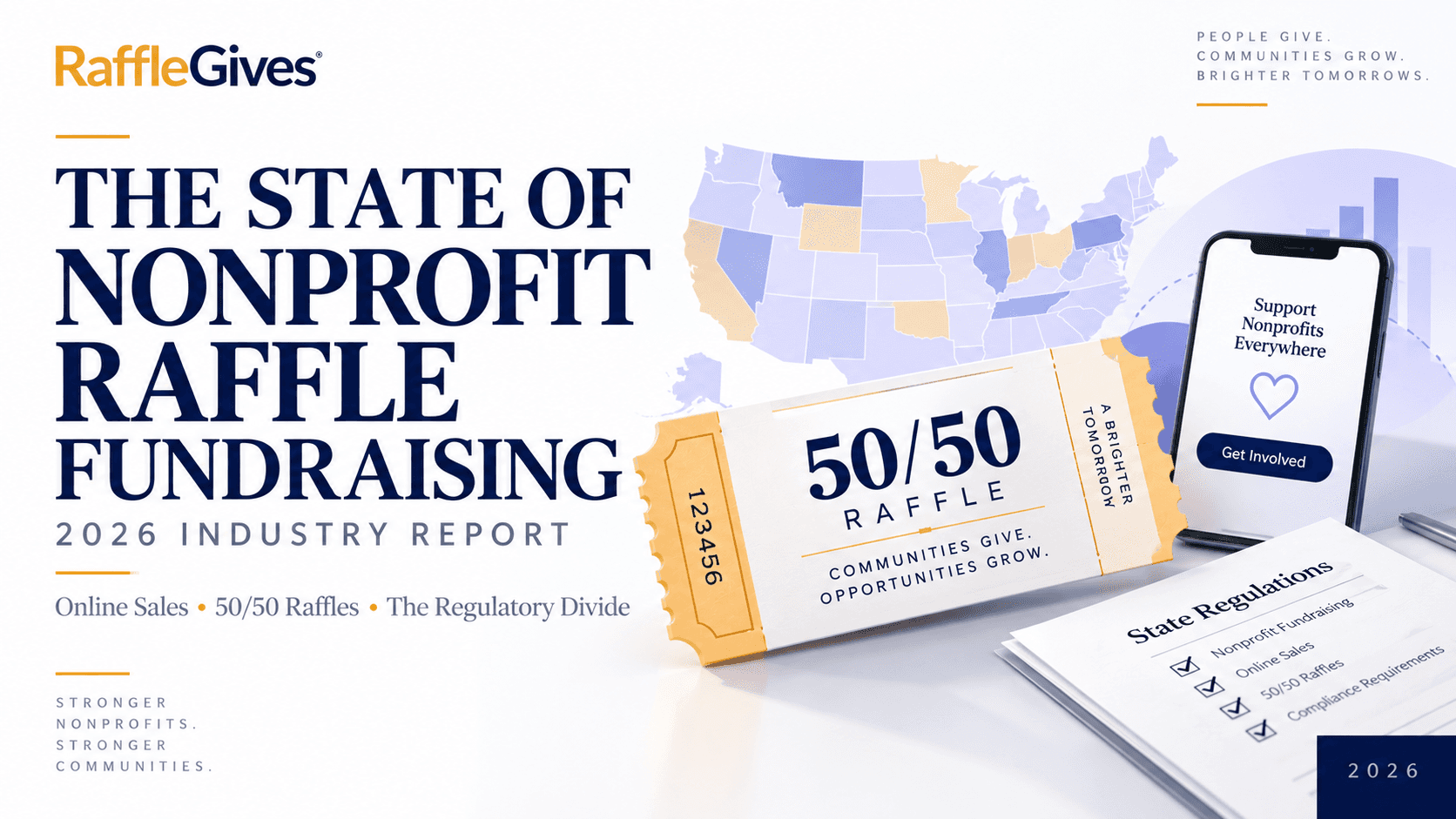
Organizations can also explore Raffle Laws by State before designing a campaign and read the RaffleGives online raffle platform guide to understand the platform.
Add Another Entry Point to Your Fundraising Strategy
A raffle can raise money for today's program while introducing tomorrow's supporters to your organization.
RaffleGives gives qualifying nonprofits a purpose-built way to add digital cash and 50/50 raffles to their fundraising strategy, expand campaign distribution through Ambassadors and reduce much of the administrative work surrounding a digital raffle.
The objective is not simply to sell tickets.
It is to give more people a reason to discover your mission.
This article is provided for general informational purposes and does not constitute legal or tax advice. Raffle, privacy, marketing and charitable gaming requirements vary by jurisdiction. Organizations should confirm the rules applicable to their campaigns and communications.