How to Add a 50/50 Raffle to Your Nonprofit Event
Your next nonprofit event may already have the audience and momentum needed for an additional fundraising opportunity. Discover how Easy Day Foundation incorporated RaffleGives into its Post Malone concert event and learn how your organization can evaluate adding a 50/50 raffle to a gala, tournament, concert or community gathering.
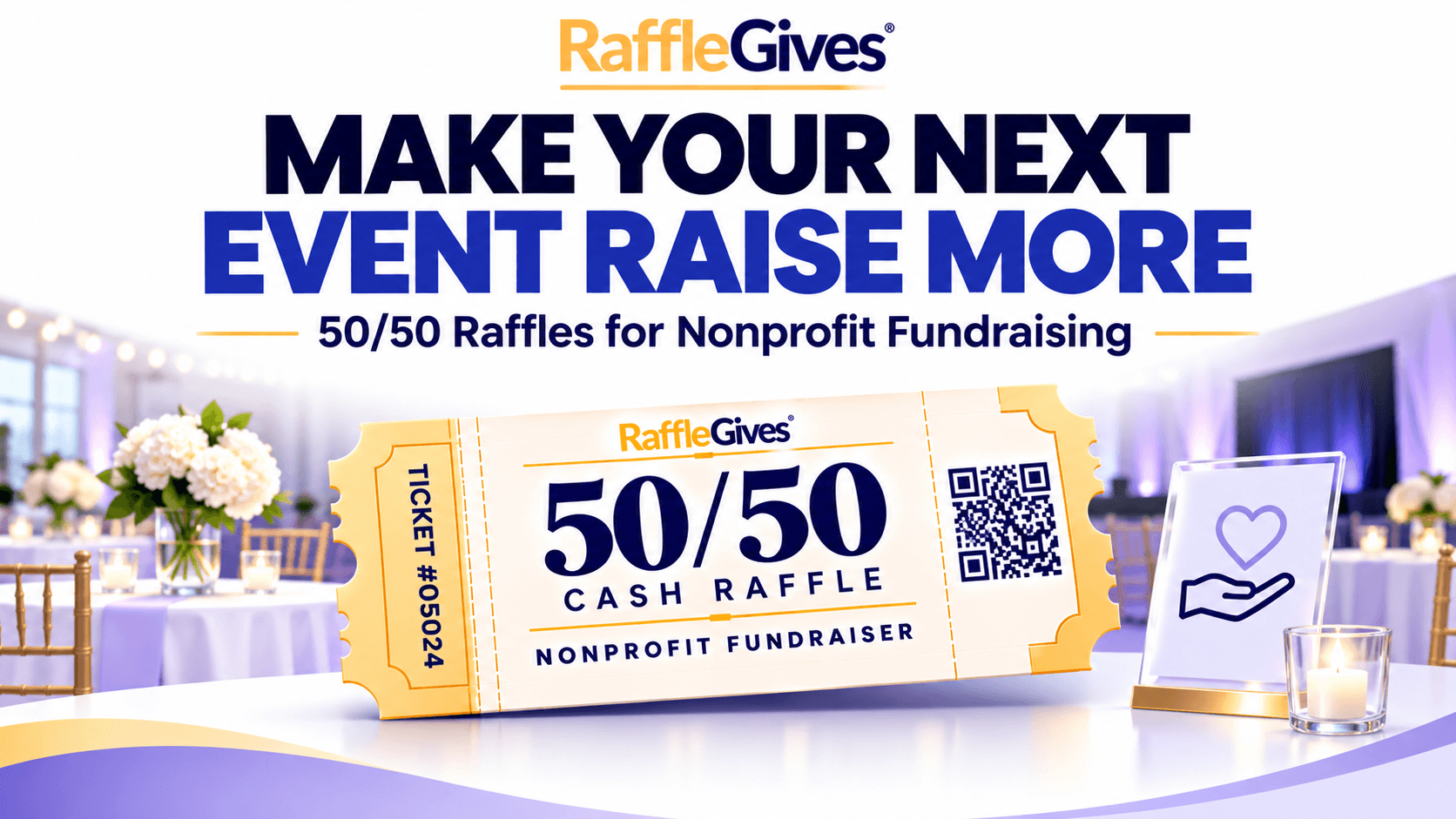
How to Raise More Money at Your Next Nonprofit Event With a 50/50 Raffle
Nonprofit fundraising events represent significant investments of time, money and organizational resources. From charity galas and golf tournaments to benefit concerts and community festivals, development teams spend months coordinating sponsors, recruiting volunteers, promoting attendance and creating experiences that inspire supporters to give.
But once an event is planned, an important question remains: Are you creating every reasonable fundraising opportunity available from the audience you've already worked so hard to bring together?
For qualifying nonprofits, adding a properly authorized 50/50 raffle to an existing event can provide an additional fundraising activity without requiring the organization to build an entirely separate event.
Instead of replacing ticket sales, sponsorships, auctions or direct donations, a raffle can complement those established revenue sources. It creates another way for eligible supporters to participate while giving nonprofit leadership an opportunity to make more effective use of its existing event infrastructure.
Easy Day Foundation offers a real-world example of this strategy. The organization incorporated a RaffleGives campaign into a Post Malone concert event, demonstrating how digital raffle fundraising can become part of a larger event experience.
For executive directors, development directors and nonprofit boards, the opportunity is worth understanding.
Your Next Fundraising Opportunity May Already Be on the Calendar
Most nonprofit organizations do not lack fundraising ideas. They lack the time, staffing and resources to execute every idea effectively.
A new fundraising event typically requires its own venue arrangements, promotional campaign, volunteer assignments, sponsor coordination and administrative planning. Even when an event is successful, the organizational effort can be substantial.
That is why existing events deserve closer attention.
Your nonprofit may already have an annual gala attracting dedicated supporters, a golf tournament with corporate sponsors, a community festival with strong local participation or a benefit concert that generates excitement around your mission.
Each of those events represents an established opportunity to connect with people who are already interested in participating.
A digital raffle can potentially introduce another fundraising activity within that existing environment.
The objective is not simply to ask attendees for more money. It is to provide an additional, engaging way for eligible participants to support the organization's work.
Easy Day Foundation: Adding a Raffle to a Post Malone Concert Event
Easy Day Foundation demonstrates how a nonprofit can integrate raffle fundraising into an event that already has a strong audience and a compelling reason for people to attend.
The foundation incorporated RaffleGives into its Post Malone concert event, adding a digital raffle campaign to the broader fundraising experience.
Rather than creating a separate event solely to conduct a raffle, the organization connected its raffle activity with an established entertainment event.
The campaign performed well for Easy Day Foundation, providing an example of how event-based fundraising and digital raffle technology can work together.
The specific financial results belong to the organization and are not necessary to understand the value of the approach.
What matters for other nonprofit leaders is the fundraising model.
An Existing Event Creates a Natural Starting Point
A concert already requires promotion, audience communication, coordination and event planning. Those activities create opportunities to introduce an additional charitable fundraising component.
When a raffle is appropriately authorized and integrated into the event plan, supporters can learn about the campaign through existing communications rather than requiring the nonprofit to establish an entirely separate promotional infrastructure.
The same principle can apply to other types of fundraising events.
A charity gala may introduce a raffle during the evening's program. A golf tournament may incorporate campaign information into its participant communications. A community festival may promote an authorized drawing through event signage and approved digital channels.
The event remains the main attraction. The raffle becomes an additional opportunity to participate.
Simplicity Matters for Development Teams
Event directors are already responsible for numerous moving parts. Adding another fundraising activity should not create an administrative burden that outweighs its potential benefit.
This is where purpose-built technology can make a difference.
RaffleGives provides campaign pages, digital ticketing, reporting and tools for sharing authorized raffle information. These capabilities can reduce manual coordination and help nonprofit staff manage a campaign alongside their existing responsibilities.
Easy Day Foundation Executive Director Heather Nepa has publicly recommended RaffleGives as a simple, repeatable fundraising platform backed by a supportive team.
Her perspective reinforces an important consideration for nonprofit leadership: fundraising technology should make an existing strategy easier to execute, not create another complicated system for volunteers and staff to manage.
Executive takeaway: Before approving another standalone fundraising event, evaluate whether a raffle could appropriately complement an event already on your calendar.
Why 50/50 Raffles Can Be a Good Fit for Nonprofit Events
A 50/50 raffle is a fundraising format in which a portion of the proceeds becomes a cash prize and the remaining portion benefits the nonprofit, subject to the raffle's official rules, permitted expenses and applicable law.
The format is straightforward for supporters to understand. Participation contributes to a shared prize pool, and the organization benefits from the charitable portion of the proceeds.
For event organizers, several characteristics make the format worth considering.
1. It Creates Another Way to Participate
Not every event attendee will purchase an auction item, make a major gift or become a corporate sponsor.
A raffle can offer a different form of participation for eligible supporters who are comfortable with the ticket price and interested in the drawing.
This does not mean raffle purchases replace charitable donations. In fact, raffle ticket purchases generally should not be represented as tax-deductible charitable contributions.
The advantage is that the nonprofit can provide another distinct fundraising option within the same event.
2. It Builds on Existing Audience Engagement
An event's audience is one of its most valuable assets.
People have already chosen to attend, support a participant, follow a team, enjoy a performance or participate in a community activity.
A raffle gives the organization another reason to communicate its mission and invite eligible supporters to take part.
When legally permitted, digital promotion may also allow the nonprofit to reach supporters who are not physically attending the event. Whether those individuals may purchase tickets depends on the jurisdiction's specific online-sales, geographic and eligibility requirements.
3. It Can Complement Other Fundraising Activities
Many events already combine multiple fundraising methods.
A gala may include sponsorships, dinner tickets, a live auction and a direct appeal. A golf tournament may feature team registrations, hole sponsorships and donations.
A raffle can be evaluated as an additional component rather than a replacement.
The nonprofit can preserve the event's established fundraising model while exploring whether an authorized drawing creates incremental participation.
4. It Offers a Clear Campaign Timeline
Event organizers often struggle with fundraising campaigns that have no natural deadline.
A raffle tied to an event has an obvious promotional anchor. The event date provides a useful reference point for planning communications, establishing participation deadlines and coordinating the drawing.
The actual ticket-sales closing time and drawing procedure must follow the applicable rules and approved campaign structure.
5. It Can Be Repeated at Future Events
When a raffle is operationally manageable and legally permitted, an organization may consider repeating the approach at future events.
That creates an opportunity to develop reusable procedures, promotional materials, volunteer assignments and reporting practices.
Over time, the organization can evaluate whether the raffle deserves a recurring place in its event fundraising strategy.
Five Types of Nonprofit Events That May Benefit From a Raffle
The event itself does not determine whether a raffle is legal. However, different event formats offer different opportunities for incorporating a properly authorized campaign.
Event Type | Potential Raffle Application | Strategic Benefit |
|---|---|---|
Charity gala | Promote an eligible raffle during the event program | Add another participation option alongside donations and auctions |
Golf tournament | Share campaign information through participant communications and approved event materials | Engage golfers, sponsors and other eligible supporters |
Benefit concert | Integrate a digital raffle into event promotion | Connect charitable fundraising with an established entertainment audience |
Community festival | Use authorized signage and QR codes to direct visitors to campaign information | Introduce the nonprofit to a broader community audience |
School or youth organization event | Offer a permitted raffle through an eligible sponsoring organization | Complement existing fundraising activities and supporter outreach |
Charity Galas and Banquets
A gala typically involves substantial planning, sponsorship coordination and an established guest list.
A raffle may provide another fundraising opportunity for guests who do not participate in the live auction or direct giving appeal.
Organizers can evaluate how to introduce the campaign without distracting from the event's primary fundraising activities.
Golf Tournaments
Charity golf tournaments bring together participants, business sponsors and volunteers.
Where permitted, a digital raffle can complement team registrations and sponsorship packages. Campaign information can be included in approved participant communications and event materials.
The key is to make participation straightforward without creating unnecessary responsibilities for tournament volunteers.
Concerts and Entertainment Events
Benefit concerts can generate excitement and attract supporters who may not regularly attend traditional nonprofit fundraising functions.
Easy Day Foundation's Post Malone event illustrates this application.
A raffle can become part of the broader charitable experience while allowing the nonprofit to preserve the entertainment event as the primary attraction.
Community Festivals and Public Events
Community festivals can introduce nonprofit organizations to people outside their existing supporter base.
An authorized raffle may create an opportunity to explain the nonprofit's mission and invite participation.
Event organizers should confirm any additional venue, municipal, promotional or charitable gaming requirements before proceeding.
School and Youth Organization Events
School communities, booster organizations and youth nonprofits frequently organize events involving families, volunteers and local sponsors.
Raffles may be an option for eligible organizations, but school affiliation alone does not establish charitable gaming eligibility.
Leadership should confirm which legal entity may conduct the raffle and whether the proposed format is permitted.
The Event Raffle Planning Framework
Adding a raffle to an existing event should be a deliberate operational decision.
The following framework can help nonprofit executives determine whether the opportunity makes sense.
Step 1: Establish the Fundraising Objective
Begin with a clear purpose.
What will the additional fundraising activity support? Is the objective to supplement general operations, fund a particular program or create another participation opportunity during the event?
A defined purpose helps the organization explain the campaign to supporters and evaluate its effectiveness afterward.
It also prevents the raffle from becoming an unrelated activity disconnected from the nonprofit's mission.
Step 2: Confirm Eligibility and Legal Requirements
Before creating a campaign, confirm that the organization is legally eligible to conduct the proposed raffle.
State and local charitable gaming laws may regulate cash prizes, 50/50 structures, licenses, permits, electronic payments, internet ticket sales, event locations, purchaser eligibility and drawing procedures.
A nonprofit may be permitted to conduct a traditional raffle without being authorized to sell tickets online.
Similarly, a jurisdiction may allow certain merchandise drawings while imposing additional restrictions on cash raffles.
Review the specific requirements before advertising or accepting participation.
RaffleGives maintains a State Raffle Laws resource library to help organizations begin that research.
Step 3: Assign a Campaign Owner
An event raffle should have one person responsible for coordinating the activity.
That individual might be the development director, event manager or another authorized representative.
The campaign owner should oversee the schedule, approved messaging, campaign setup, volunteer coordination, compliance documentation and final reporting.
Clear ownership reduces the likelihood of confusion when multiple staff members and volunteers are involved.
Step 4: Integrate the Raffle Into Existing Event Communications
One advantage of an event-based raffle is the ability to use communications already being developed for the event.
Depending on applicable rules, organizers may be able to incorporate raffle information into email announcements, event websites, social media posts, sponsor communications and printed materials.
QR codes can help direct eligible supporters to a digital campaign page where permitted.
The objective is to make the raffle visible without requiring a completely separate marketing operation.
Step 5: Prepare the Event-Day Experience
Event organizers should determine how attendees will learn about the raffle and where they can find accurate participation information.
If the law permits digital sales, a campaign page may simplify ticket access and reduce manual administration.
The team should also prepare for common questions about eligibility, ticket prices, drawing deadlines, prize calculations and winner notification.
Clear instructions help volunteers communicate consistently and reduce confusion for supporters.
Step 6: Conduct the Drawing and Close the Campaign
The drawing should follow the official rules and all applicable legal requirements.
Organizations should ensure that ticket sales close at the required time, eligible entries are handled correctly and winner-selection procedures are documented.
RaffleGives provides automated winner-selection functionality, subject to the nonprofit's approved campaign procedures and applicable requirements.
Afterward, the organization should complete winner notification, prize distribution, required reporting and supporter communications.
Step 7: Evaluate the Results
The final step is to determine whether the raffle created meaningful value for the nonprofit.
Leadership should review the campaign's financial outcome, administrative effort, participation, supporter engagement and operational challenges.
The objective is not merely to determine whether tickets were sold.
It is to understand whether the activity was worthwhile and whether a similar approach should be considered for future events.
What Does an Event Raffle Cost?
For nonprofit executives and board members, the financial model is an important part of evaluating any new fundraising activity.
Traditional fundraising events can involve substantial fixed expenses. A digital raffle platform with performance-based pricing offers a different cost structure.
RaffleGives does not charge upfront platform fees, monthly subscriptions or hosting charges. Its standard platform fee is 8% of gross ticket sales, with payment processing fees separate.
That means an organization can create and prepare a campaign without committing to recurring software expenses.
However, no upfront platform fee does not mean a raffle has no costs or financial risks.
The nonprofit should still evaluate potential licensing expenses, promotional materials, staff time, payment processing, refunds, prize obligations and other applicable costs.
Understanding the 50/50 Financial Model
RaffleGives' standard 50/50 structure calculates the prize and nonprofit shares from net proceeds after applicable platform and processing deductions, as described in the campaign rules.
For example, the calculation begins with gross ticket sales, deducts the relevant fees and then applies the approved distribution formula to the resulting amount.
The exact allocation must be disclosed and permitted under the governing law. Some jurisdictions impose specific requirements on prize percentages or allowable deductions.
Nonprofit leaders should review the final campaign economics before launch rather than assuming that half of gross sales will automatically become charitable revenue.
How RaffleGives Helps Nonprofits Manage Event Raffles
Adding a raffle should not require an event director to become a software administrator or a volunteer team to manually reconcile hundreds of paper tickets.
RaffleGives is designed to help qualifying nonprofits manage digital raffle campaigns through a centralized platform.
A Branded Fundraising Page
Organizations can create a campaign page featuring their nonprofit identity, raffle information and fundraising purpose.
This provides a consistent destination for approved campaign communications.
Digital Ticketing
Where electronic ticket sales are authorized, eligible supporters can participate through the platform rather than relying exclusively on paper-ticket distribution.
This can reduce manual handling and simplify campaign administration.
Secure Payment Processing
RaffleGives uses nonprofit-connected Stripe accounts for payment processing.
The organization retains visibility into its payment activity and receives funds according to the applicable processing arrangements.
QR Codes and Shareable Links
Approved campaign links and QR codes can help organizations incorporate raffle information into event communications, signage and volunteer outreach.
These tools are particularly useful when an event already has established promotional channels.
Campaign Reporting
Real-time campaign information helps authorized staff monitor ticket activity and manage the fundraiser.
Centralized reporting can also support post-event evaluation and internal accountability.
Automated Winner Selection
The platform provides winner-selection functionality designed to reduce manual drawing administration.
The nonprofit remains responsible for ensuring the procedure meets applicable legal requirements and the campaign's official rules.

A Practical Timeline for Adding a Raffle to Your Next Event
The earlier a raffle is considered in the event planning process, the easier it is to coordinate the necessary approvals and communications.
Timing | Executive Priority | Operational Focus |
|---|---|---|
6–8 weeks before | Determine whether the raffle is appropriate | Legal review, permits, objectives and budget |
4–6 weeks before | Approve the campaign plan | Platform setup, rules, ownership and messaging |
2–4 weeks before | Begin authorized promotion | Email, website, sponsors and volunteer preparation |
Event week | Confirm operational readiness | Test campaign access, review deadlines and brief staff |
Event day | Support eligible participation | Approved communications, assistance and monitoring |
After the event | Close and evaluate | Drawing, prize fulfillment, reporting and follow-up |
This is an illustrative planning schedule, not a guarantee that a raffle can be authorized within a particular timeframe. Some jurisdictions may require longer lead times for licensing or approvals.
Common Mistakes Nonprofits Should Avoid
The most effective event raffle strategies are planned alongside the event rather than added at the last minute.
Several avoidable mistakes can undermine the experience.
Launching before confirming the rules. A raffle that is legal in one state may not be permitted in another. Online ticket sales and cash prizes require particular attention.
Treating the raffle as an afterthought. If attendees only learn about the campaign moments before the drawing, participation may be limited.
Failing to assign responsibility. Without a clear campaign owner, important tasks can be overlooked.
Overcomplicating participation. Supporters should be able to understand the campaign, eligibility requirements and official rules without unnecessary confusion.
Ignoring the financial details. Leadership should understand the difference between gross sales, allowable deductions, prize distributions and actual nonprofit proceeds.
Forgetting the post-event relationship. A raffle can create an opportunity to introduce participants to the nonprofit's broader mission, but follow-up communications must respect applicable privacy and consent requirements.
The Executive Decision: Is an Event Raffle Worth Exploring?
Not every nonprofit event needs a raffle.
The decision should depend on the organization's eligibility, available resources, event audience and fundraising objectives.
However, a properly structured raffle can be worth evaluating when the nonprofit already has an engaged audience, established communications and a clear reason for inviting supporters to participate.
Easy Day Foundation's experience demonstrates how an organization can incorporate digital raffle fundraising into a major event without making the raffle the event's sole purpose.
For nonprofit executives, that is the broader opportunity.
Instead of continuously searching for new fundraising events, examine the events your organization already produces.
Consider whether a digital raffle could complement the work, relationships and audience engagement already in place.
Frequently Asked Questions
Can a nonprofit add a 50/50 raffle to a gala or fundraising dinner?
Potentially. Qualifying nonprofits may incorporate 50/50 raffles into events where cash raffles and the proposed sales methods are legally permitted. The organization must confirm applicable licensing, prize, sales and drawing requirements.
Can a nonprofit sell raffle tickets before the event?
Some jurisdictions permit advance sales, including online sales, while others impose restrictions. Organizations must confirm the permitted sales period, channels and purchaser locations before launching.
Can people who are not attending the event participate?
Possibly. Attendance requirements and geographic restrictions vary. A digital campaign page does not automatically authorize participation from outside the event or state.
Do nonprofits need a separate raffle license for an event?
Requirements vary by jurisdiction. Some organizations may need a specific charitable gaming license or permit, while others may qualify for exemptions or alternative authorization procedures.
How much does RaffleGives charge?
RaffleGives has no upfront platform fee or monthly subscription. Its standard fee is 8% of gross ticket sales, with Stripe processing fees separate.
Can a nonprofit run raffles at multiple events throughout the year?
That depends on applicable law, organizational eligibility and any limits on raffle frequency, prize amounts or licensing. Organizations should review these requirements before establishing a recurring schedule.
Are raffle ticket purchases tax-deductible donations?
Generally, no. Payments for a chance to win a prize are ordinarily treated differently from charitable donations. Nonprofits should avoid describing raffle ticket purchases as tax-deductible contributions and consult their tax advisers about reporting obligations.
Make Your Next Fundraising Event Work Harder
Your organization has already invested in bringing people together, building relationships and creating an event that supports its mission.
A properly authorized digital raffle may provide an additional way to turn that engagement into charitable fundraising.
Easy Day Foundation's Post Malone concert experience illustrates the opportunity to complement an established event with a RaffleGives campaign.
Whether your next event is a gala, golf tournament, concert or community gathering, the right fundraising tools can help your organization evaluate new opportunities without committing to another major event.
Add a New Fundraising Opportunity to Your Next Event
Your next gala, tournament or community event could offer more ways for supporters to make an impact.
RaffleGives helps qualifying nonprofits add digital raffles to existing events with no upfront platform fees and no monthly subscriptions.
Explore how a raffle could fit your event strategy and begin planning a campaign designed around your organization.
Start Fundraising With RaffleGives
Related Reading
- How Nonprofits Are Using RaffleGives to Create New Fundraising Opportunities
- How to Promote an Online 50/50 Raffle
- How to Build a 30-Day Marketing Plan for an Online 50/50 Raffle
- 501(c)(3) Raffle Rules for Nonprofits
- RaffleGives Online Raffle Platform
Follow RaffleGives for nonprofit fundraising strategies, digital raffle ideas and charitable gaming updates.
Raffle availability, online sales, cash prize structures and drawing procedures depend on applicable law. This article is educational and does not constitute legal or tax advice.