How Nonprofits Can Launch an Easter Raffle to Grow Donations and Community Engagement in 2026
How Nonprofits Can Launch an Easter Raffle to Grow Donations and Community Engagement in 2026
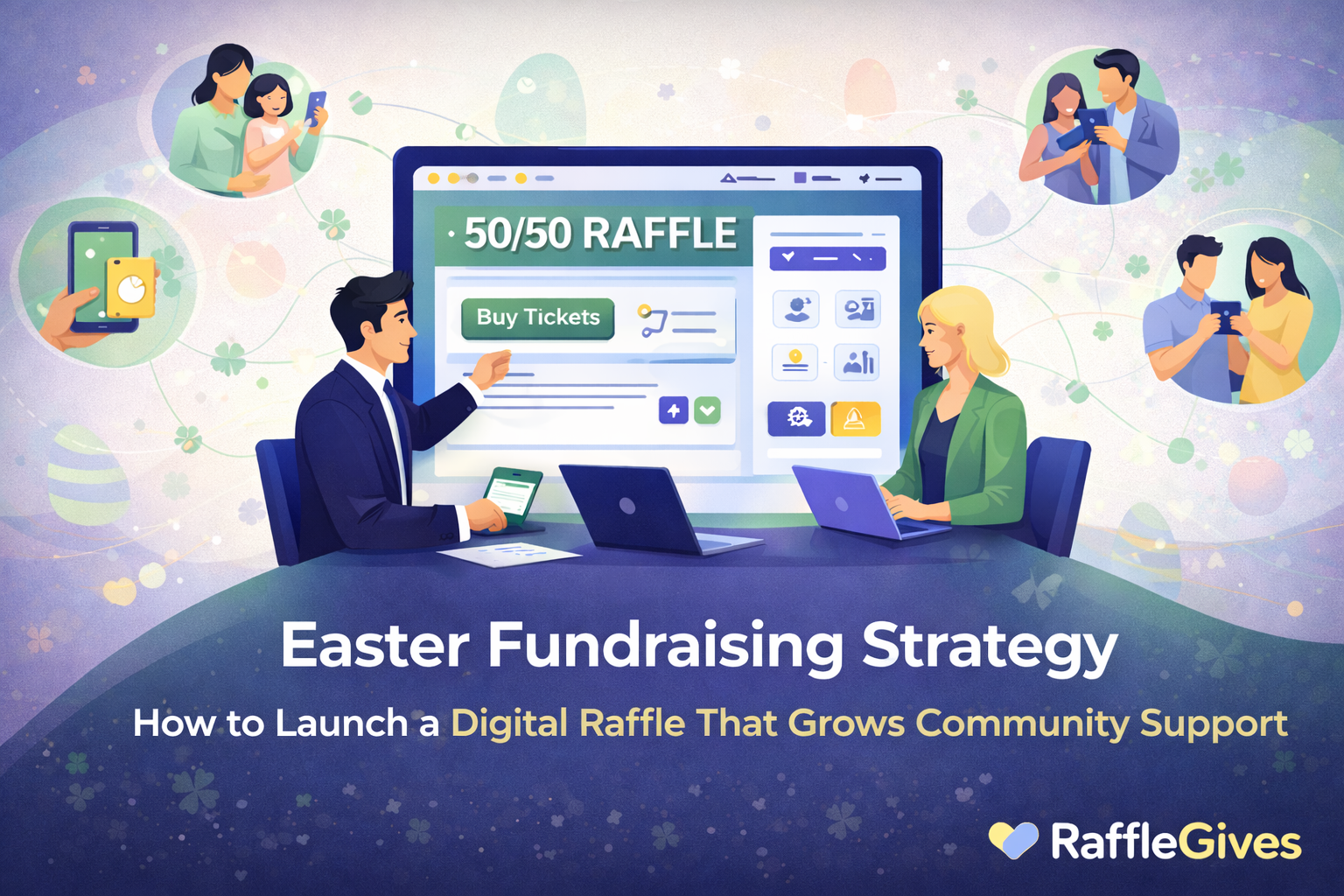
Easter is one of the most widely recognized seasonal moments in the United States. For many, it carries deep religious meaning. For others, it is centered around family gatherings, spring traditions, and community celebrations. For nonprofits, Easter presents something equally important. It offers a strategic opportunity to re-engage supporters during a natural period of renewal and participation.
Coming shortly after the early-year lull and before the summer fundraising season begins, Easter provides a timely anchor for a focused digital campaign. In 2026, nonprofits that align their fundraising efforts with moments people are already celebrating will be better positioned to capture attention and participation.
Why Is Easter a Strategic Fundraising Opportunity?
The fundraising calendar often places heavy emphasis on year-end campaigns, giving days, and major annual events. As a result, many organizations experience slower engagement during the first quarter of the year.
Easter disrupts that slowdown. Communities are already gathering for services, school programs, spring festivals, and neighborhood events. Families are planning celebrations and participating in seasonal traditions. When a nonprofit introduces a fundraiser that complements those gatherings, the campaign feels relevant rather than intrusive.
Seasonal alignment matters. Instead of asking supporters to focus on a standalone appeal, nonprofits can connect their mission to a moment that already has built-in momentum.
How Can an Easter Raffle Encourage Participation Instead of Just Donations?
Traditional fundraising often centers on direct appeals. While effective, repeated donation requests can contribute to donor fatigue. A raffle, by contrast, invites participation in a time-bound experience. An Easter raffle provides clarity. Supporters understand the structure immediately. There is a defined drawing date tied to the season, a clear explanation of how proceeds support the mission, and a straightforward way to participate.
This simplicity lowers hesitation. When participation is easy and intuitive, supporters are more likely to engage and to share the opportunity with others. That sharing behavior is what transforms a fundraiser from a small campaign into a community-wide effort.
Why Does Easter Naturally Expand Community Reach?
Easter is strongly associated with family traditions and social gatherings. That makes it particularly effective for community-powered fundraising.
When someone participates in a seasonal raffle, they are likely to mention it during gatherings or share it through digital channels. The fundraiser moves beyond the nonprofit’s existing donor list and into personal networks. These new audiences often represent first-time participants who may not have engaged with the organization previously.
Because the campaign is tied to a specific moment on the calendar, it carries built-in urgency. That urgency supports momentum without requiring aggressive messaging.
What Makes an Easter Raffle Effective in 2026?
In today’s environment, digital accessibility and clarity are more important than complexity. Supporters expect to participate from their phones. They expect transparency in how funds are used. They expect a frictionless experience.
Cash and 50/50 raffles are particularly effective for seasonal campaigns because they eliminate the logistical challenges associated with physical prizes. There is no need for storage, shipping, or coordination with vendors. The focus remains on engagement and mission impact. When participation requires only a few simple steps, nonprofits reduce barriers and increase completion rates. That efficiency is especially valuable during short seasonal windows.
How Can an Easter Campaign Help Acquire New Donors?
Seasonal campaigns are powerful acquisition tools when they are designed for digital sharing.
An Easter raffle encourages supporters to introduce the campaign to friends, coworkers, and extended family members. These introductions often bring entirely new participants into the organization’s ecosystem. While not every participant becomes a long-term donor, many do, particularly when nonprofits follow up with thoughtful communication after the campaign ends.
Acquisition does not always require large marketing budgets. It often requires creating a moment that people are willing to talk about and share. Easter provides that moment.
Where Does RaffleGives Fit Into an Easter Strategy?
Seasonal fundraising requires speed, clarity, and trust. RaffleGives was built specifically to support nonprofits running compliant online cash raffles and 50/50 raffles without operational burden.
Because the platform simplifies setup, sharing, and winner selection, nonprofit teams can focus their energy on promotion and engagement rather than logistics. This is particularly important for time-sensitive campaigns like Easter, where momentum builds quickly and then passes. An Easter raffle should feel intentional and professional. When the process is transparent and seamless, supporter confidence increases.
Why Seasonal Fundraising Builds Long-Term Stability
Organizations that diversify their fundraising calendar are more resilient. Instead of relying heavily on year-end appeals or one annual gala, they create multiple engagement points throughout the year.
Easter serves as a strategic early-year anchor. It allows nonprofits to stabilize revenue, re-engage supporters, and test digital-first strategies in a contained timeframe. Lessons learned during seasonal campaigns can then be applied to larger initiatives later in the year.
In 2026, resilience will come from distributed opportunities rather than concentrated pressure.
Final Thoughts
Easter represents renewal and gathering. For nonprofits, it also represents a strategic opportunity to align fundraising with community momentum. By designing a digital-first Easter raffle that is simple, transparent, and shareable, nonprofits can increase engagement, attract new supporters, and strengthen early-year revenue. The key is not the holiday itself, but how intentionally the campaign is designed around it.
Seasonal fundraising works best when it feels natural. Easter provides the moment. A well-executed raffle turns that moment into sustainable growth.
Related Reading