How to Design Engaging Digital-First Fundraising Strategies for Nonprofits
Design engaging digital-first fundraising strategies that drive participation and community sharing. Learn how nonprofits can increase engagement, reduce donor fatigue, and build scalable digital campaigns in 2026.
Introduction
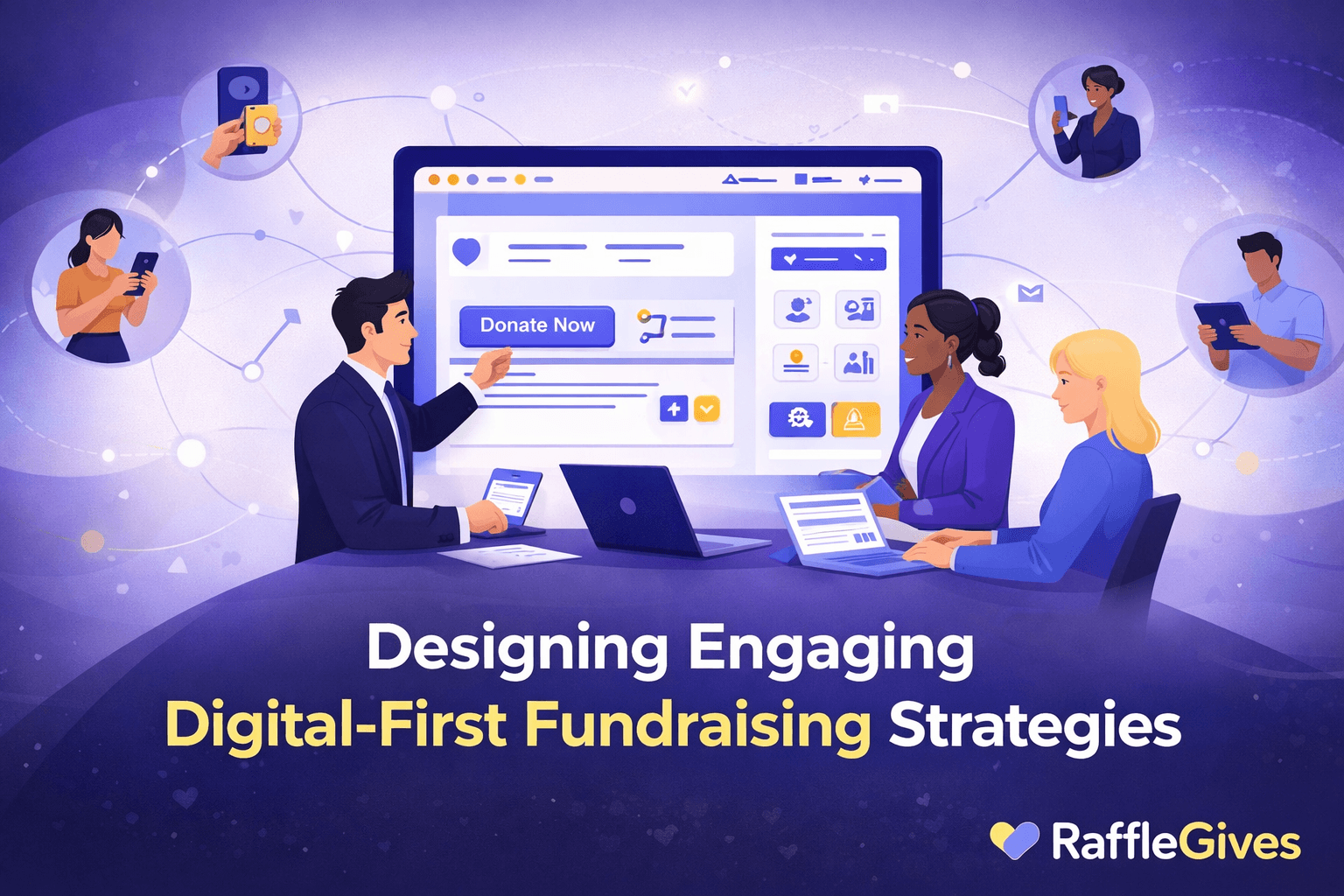
Designing a digital-first fundraising strategy is no longer about choosing the right tools or launching the next online campaign. In 2026, the nonprofits that succeed digitally are the ones that design fundraising experiences around how supporters actually engage, share, and participate online.
Engagement is the difference between a digital fundraiser that quietly exists on a website and one that spreads organically through communities. A digital-first strategy must be intentional, participatory, and easy for supporters to understand and share.
This article focuses on how nonprofits can design digital-first fundraising strategies that drive real engagement, not just impressions or clicks.
Engaging Digital-First Fundraising Strategies
An engaging digital-first fundraising strategy is built around participation, not transactions. Rather than asking supporters to give repeatedly, it invites them into an experience that feels purposeful and social.
Engagement happens when supporters understand exactly what they are participating in, why it matters, and how easy it is to take part. Digital campaigns that feel complicated, unclear, or overly sales-driven quickly lose momentum. The most effective strategies prioritize clarity, simplicity, and emotional connection over volume.
Engagement Must Be Designed
One of the most common mistakes nonprofits make is treating engagement as something to “add on” after a campaign is launched. By that point, the structure is already set, and opportunities for participation are limited. Digital-first fundraising works best when engagement is designed into the campaign from the very beginning. This includes how supporters discover the fundraiser, how they participate, and how easily they can share it with others.
When campaigns are designed with engagement in mind, supporters naturally become advocates rather than passive donors.
Storytelling Shapes Digital Engagement
Storytelling remains one of the most powerful drivers of engagement in digital fundraising, but it must be adapted for digital behavior.
In a digital-first strategy, stories need to be:
- Easy to understand quickly
- Shareable across platforms
- Closely tied to the action being requested
Rather than long narratives buried on a website, effective digital storytelling uses clear messaging, visuals, and short explanations that supporters can easily repeat when sharing a campaign.
When supporters can confidently explain a fundraiser in their own words, engagement increases dramatically.
Community Participation Multiplies Engagement
Digital-first fundraising strategies are most effective when they leverage communities rather than relying solely on organizational outreach.
Supporters are far more likely to engage when they see people they know participating. This is why community-powered campaigns consistently outperform centralized appeals. Families, volunteers, members, and peer networks extend the reach of a fundraiser far beyond what an organization can do on its own.
Designing campaigns that encourage participation and sharing transforms fundraising into a collective effort instead of a one-way request.
Where Online Raffles Fit In
Online raffles, especially cash and 50/50 raffles, fit naturally into engaging digital-first fundraising strategies because they are intuitive and participatory by design.
Supporters immediately understand how raffles work. They know what they are participating in, what the outcome is, and how their participation supports the organization. This clarity reduces hesitation and increases engagement.
Raffles also create a natural reason for supporters to share a campaign with their networks, especially when participation is quick and accessible from any device.
Simplicity Drives Higher Engagement
One of the most important principles in designing digital-first fundraising strategies is simplicity.
Digital supporters have limited attention. Campaigns that require too many steps, explanations, or decisions lose engagement quickly. Successful digital-first fundraisers minimize friction at every stage, from discovery to participation.
When supporters can engage in seconds rather than minutes, participation rates increase and sharing becomes more natural.
How RaffleGives Supports Engaging Digital-First Fundraising Strategies
RaffleGives was designed with engagement as a core principle. The platform focuses on online cash raffles and 50/50 raffles that are easy to understand, simple to share, and transparent for supporters.
By removing the complexity associated with physical prizes, logistics, and manual tracking, RaffleGives allows nonprofits to focus on designing engaging experiences rather than managing operations.
For organizations building digital-first strategies, this simplicity helps keep supporters engaged while expanding reach through community participation.
Where Does a Nonprofit Start?
Nonprofits do not need to abandon existing fundraising efforts to design engaging digital-first strategies. Many begin by rethinking how supporters interact with campaigns they already run. This might mean redesigning a campaign to be more shareable, adding a digital raffle component to an event, or simplifying participation steps. Over time, these design choices create campaigns that feel more engaging and less transactional.
The most important shift is intentionality. Engagement should be designed, not hoped for.
Final Thoughts
Engaging digital-first fundraising strategies are not built on technology alone. They are built on understanding how people participate, share, and connect online.
When nonprofits design campaigns that prioritize clarity, community, and ease of participation, digital fundraising becomes more than a channel. It becomes a sustainable way to grow support, reach new audiences, and strengthen long-term engagement.
In 2026 and beyond, the most successful nonprofits will not be the ones that simply use digital tools, but the ones that design fundraising experiences people want to be part of.
Related Reading