How Digital-First Fundraising is Becoming the Core Revenue Channel for Nonprofits in 2026
Digital-first fundraising is becoming the core revenue channel for nonprofits in 2026. Learn why nonprofits are shifting to digital strategies, how community-powered campaigns outperform traditional appeals, and where online raffles fit into modern fundraising.

Introduction
For years, nonprofit leaders treated digital fundraising as a supporting channel. Email campaigns, social posts, and online donation forms were useful, but rarely viewed as the backbone of a fundraising strategy. That mindset has now shifted.
In 2026, digital-first fundraising is no longer optional. It is becoming the core revenue channel for nonprofits of all sizes. Economic uncertainty, donor fatigue, changing donor behavior, and the continued decline of traditional fundraising methods have forced organizations to rethink how they raise money and how they reach supporters.
Nonprofits that embrace digital-first strategies are finding greater stability, broader reach, and new donor acquisition opportunities. Those that do not are struggling to maintain momentum.
What Does “Digital-First Fundraising” Actually Mean?
Digital-first fundraising does not mean abandoning in-person events, mail appeals, or relationship-based giving. It means designing fundraising strategies with digital participation as the foundation, not the afterthought.
In a digital-first model, online engagement is built into every campaign from the beginning. Fundraisers are designed to be shared easily, accessed on mobile devices, and supported by digital tools that remove friction for both donors and organizers.
This approach recognizes a simple reality. Most supporters now discover, evaluate, and engage with nonprofits through digital channels before they ever attend an event or receive a mailed appeal.
Why Are Nonprofits Shifting Toward Digital-First Fundraising Now?
Several converging trends are accelerating this shift.
Traditional donor acquisition has become more expensive and less predictable. At the same time, donors increasingly expect fast, transparent, and mobile-friendly ways to support causes they care about. According to research from the Fundraising Effectiveness Project, donor retention remains under pressure nationwide, making acquisition and engagement strategies more critical than ever.
Digital-first fundraising allows nonprofits to reach beyond a shrinking pool of habitual donors and connect with new supporters through social networks, community sharing, and peer-to-peer engagement. It also provides real-time data that helps organizations adjust campaigns quickly instead of waiting until after a fundraiser ends to evaluate performance.
How Does Digital-First Fundraising Help Address Donor Fatigue?
One of the biggest challenges nonprofits face today is donor fatigue. Supporters are overwhelmed by constant appeals, particularly during year-end giving seasons. In the first quarter of the year most donors are recovering from these year-end sprints which makes it the perfect time to plan your fundraising events for the year.
Digital-first fundraising shifts the focus away from repeated asks and toward participation-based engagement. Instead of relying solely on donation requests, organizations invite supporters to take part in fundraisers that feel interactive, social, and mission-driven.
Campaigns that include ticket-based fundraising, peer sharing, or digital events give supporters a reason to engage without feeling pressured to give repeatedly. This helps preserve trust while still generating revenue.
Why Community-Powered Digital Campaigns Outperform Centralized Appeals
Digital-first fundraising works best when it leverages community networks rather than relying solely on organizational outreach.
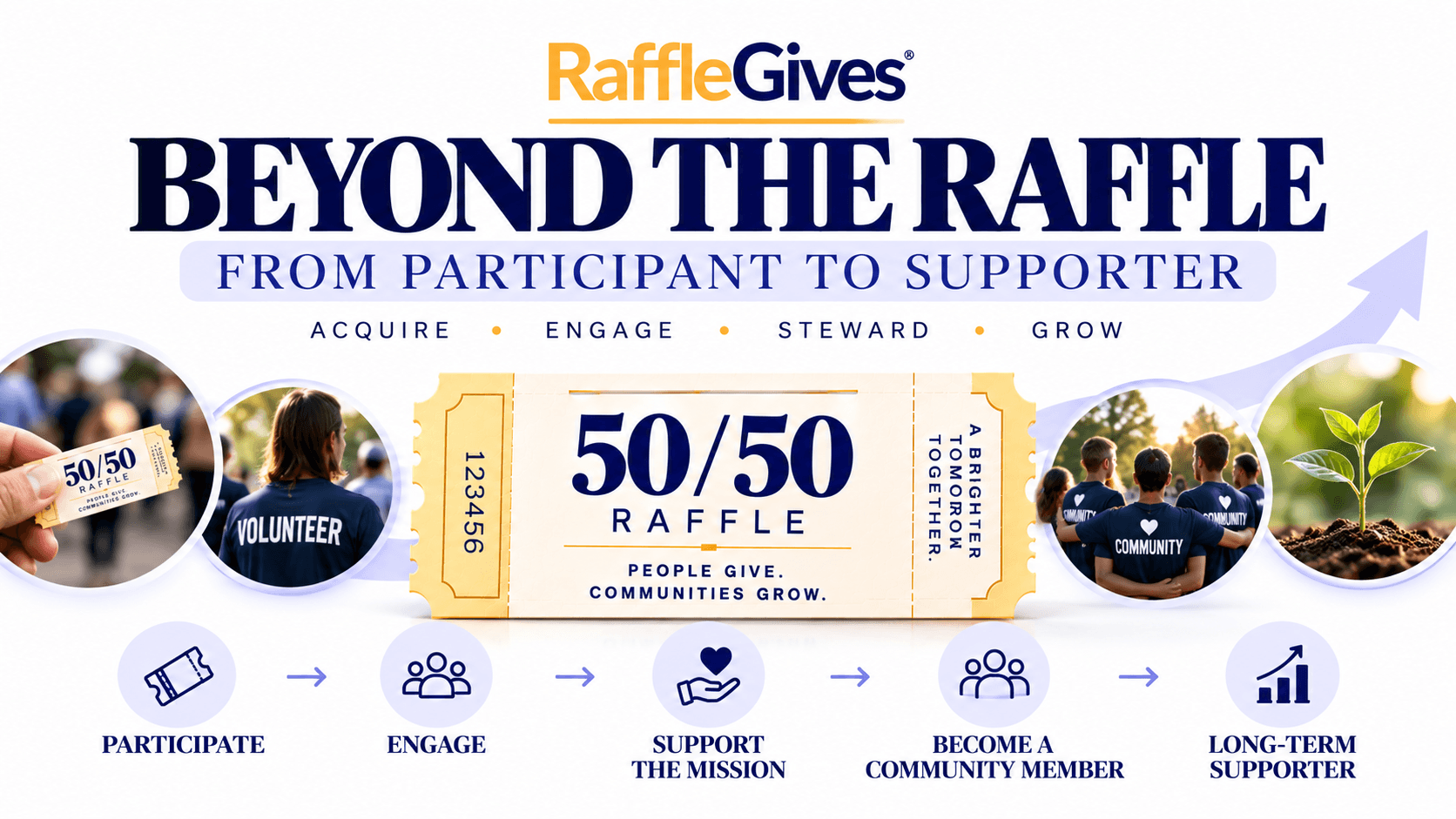
When volunteers, families, members, or supporters share a fundraiser digitally, they extend its reach far beyond an email list or social media page. Each participant introduces the campaign to people who may have never interacted with the nonprofit before.
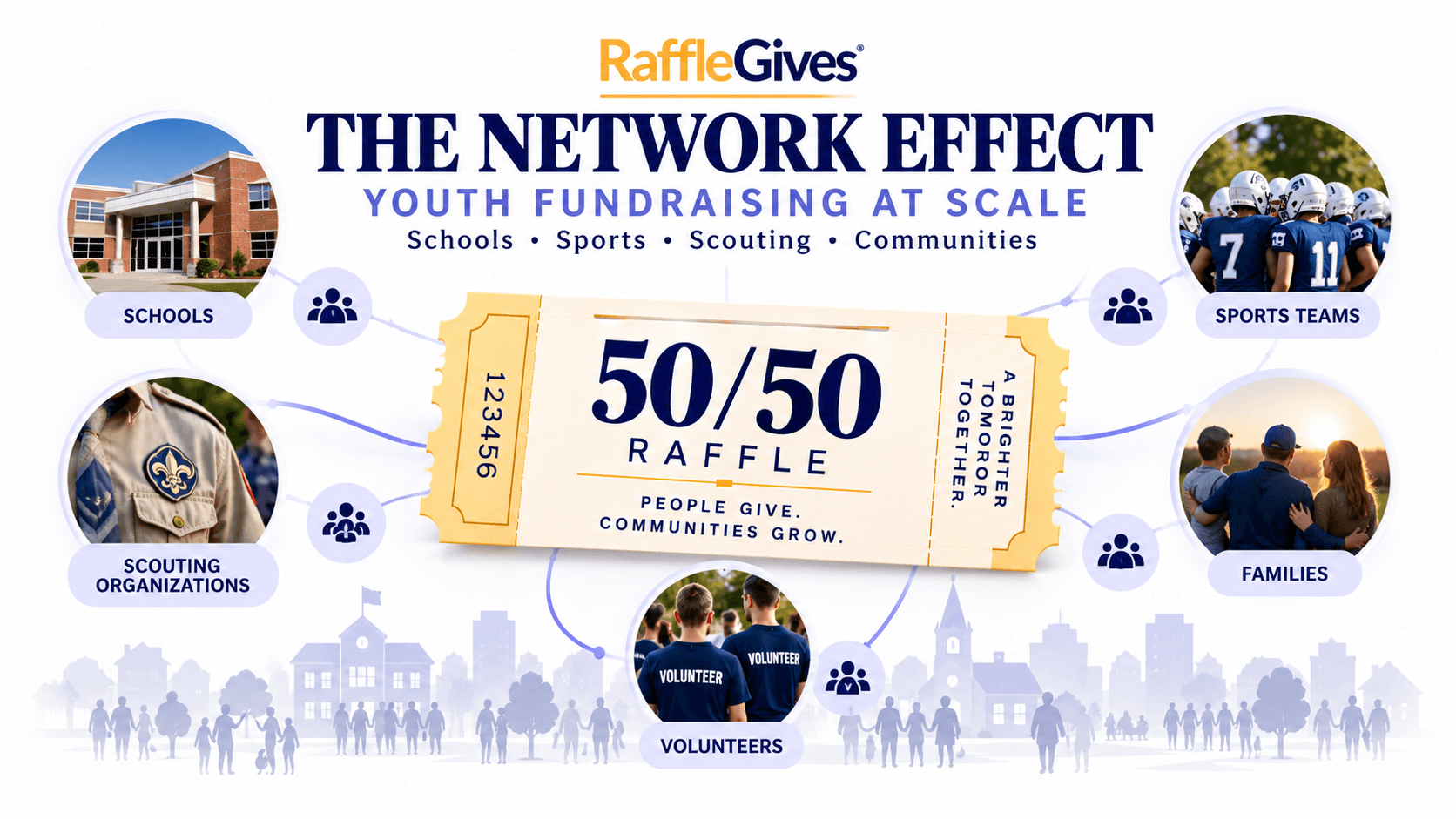
This dynamic is especially powerful for membership-based organizations, youth groups, and nonprofits with strong community ties. It allows fundraising to scale organically through trusted relationships instead of paid advertising or constant solicitation.
Where Online Raffles Fit Into a Digital-First Strategy
Online raffles, particularly cash and 50/50 raffles, have emerged as a natural fit within digital-first fundraising strategies.
They work because they are simple to understand, easy to participate in, and highly shareable. Supporters do not need extensive explanations or follow-up. A clear purpose, a transparent structure, and a straightforward way to participate are often enough to drive engagement.
Online raffles also complement existing fundraising efforts rather than replacing them. They can be used alongside events, campaigns, or seasonal initiatives to add an additional digital revenue stream that reaches supporters who may not attend in person.
How RaffleGives Supports Digital-First Fundraising for Nonprofits
RaffleGives was built specifically to support nonprofits adopting digital-first fundraising strategies. The platform focuses on online cash raffles and 50/50 raffles that are designed to be easy to launch, simple to share, and transparent for supporters.
By removing logistical barriers associated with physical prizes and complex fulfillment, RaffleGives allows nonprofits to focus on engagement and participation. Supporters can participate from anywhere, and organizations can track performance in real time.
For nonprofits looking to strengthen their digital fundraising efforts without adding operational complexity, online raffles provide a flexible and effective option.
How Nonprofits Can Begin Transitioning to a Digital-First Fundraising Model
Adopting a digital-first approach does not require a complete overhaul of existing fundraising programs. Many organizations begin by layering digital strategies into campaigns they already run.
This might include adding an online raffle to an annual event, creating digital sharing tools for volunteers, or designing campaigns that prioritize mobile participation. Over time, these digital components become central rather than supplemental.
The key is intentional design. Digital-first fundraising succeeds when organizations plan for online engagement from the start instead of trying to retrofit digital tools after a campaign is already underway.
Final Thoughts
Digital-first fundraising is not a trend that nonprofits can afford to wait out. It reflects a permanent shift in how supporters engage with causes and how revenue is generated.
Nonprofits that embrace digital-first strategies are building more resilient fundraising models that adapt to changing donor behavior and economic conditions. By combining community-powered engagement with simple, transparent digital tools, organizations can expand reach, reduce reliance on traditional appeals, and create sustainable growth.
In 2026 and beyond, the question is no longer whether nonprofits should adopt digital-first fundraising. It is how quickly they can do it well.
Related Reading