How Nonprofits Can Launch a St. Patrick’s Day Raffle to Capture New Donors in 2026
Launch a St. Patrick’s Day raffle to boost nonprofit fundraising in 2026. Learn how a seasonal, digital-first raffle can increase ticket sales, attract new donors, and build momentum beyond your existing donor list.
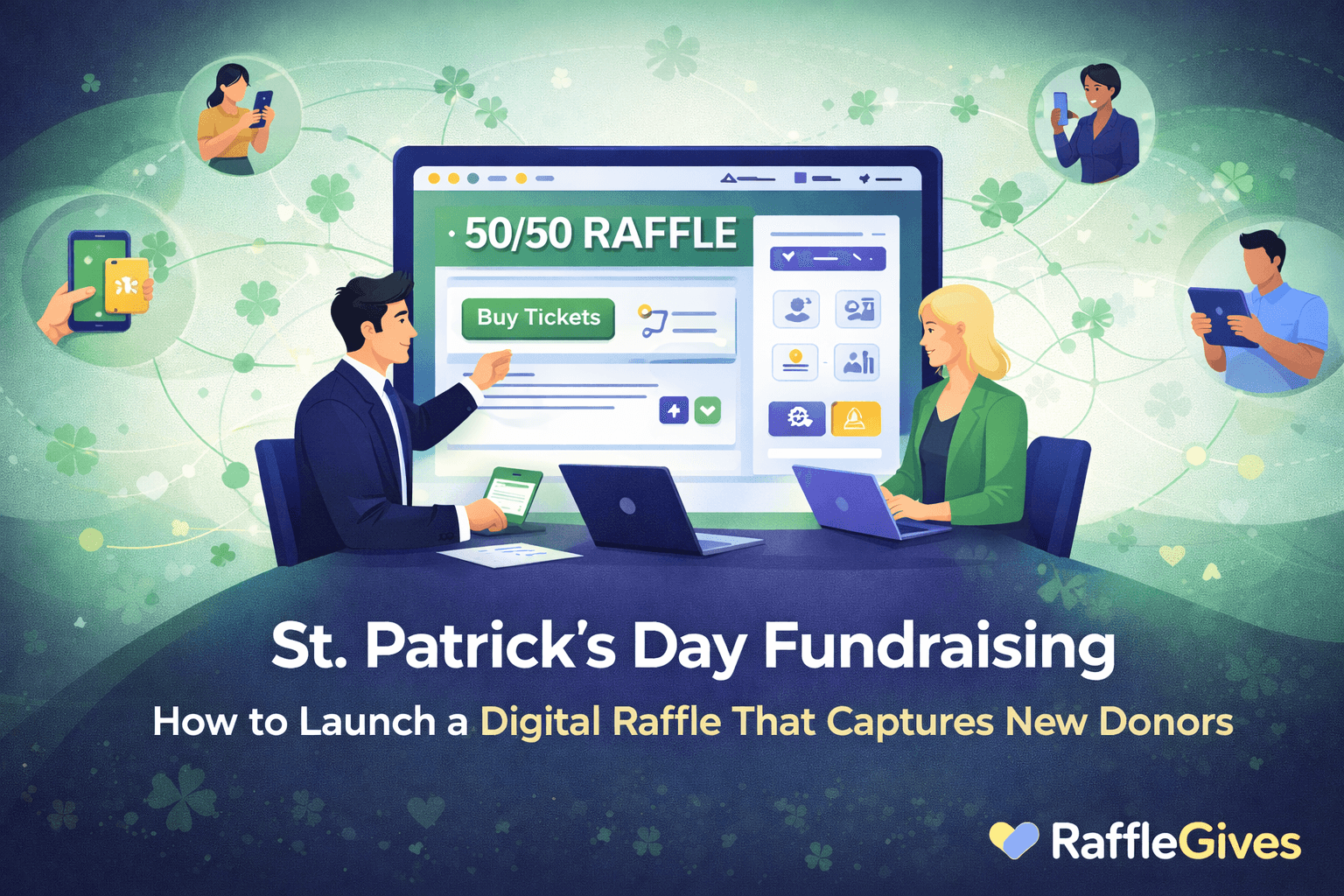
St. Patrick’s Day is often associated with parades, community gatherings, and celebration. For nonprofits, however, it represents something more strategic. It sits at a unique point in the fundraising calendar.
March arrives after the year-end push has passed and before summer events begin. Many organizations experience a seasonal lull in engagement during this period. That makes St. Patrick’s Day an ideal opportunity to re-energize supporters and attract new donors through a themed digital fundraiser.
In 2026, nonprofits that act quickly can use this culturally recognized event to build momentum heading into the second quarter of the year.
Why Is St. Patrick’s Day a Strategic Fundraising Opportunity?
Unlike major federal holidays, St. Patrick’s Day carries broad cultural participation without being tied to donation fatigue. It is social, community-driven, and widely recognized across the country.
This creates an environment where supporters are already primed for participation. They are attending events, gathering with friends, and engaging in themed activities. When a nonprofit introduces a raffle connected to the celebration, it feels natural rather than intrusive.
The timing also works in a nonprofit’s favor. March allows organizations to stabilize revenue before summer and diversify fundraising beyond traditional appeals.
How Can a Themed Raffle Attract New Donors?
Themed fundraising works because it lowers the barrier to entry. Instead of asking for a general donation, nonprofits invite supporters to participate in something specific and time-bound.
A St. Patrick’s Day raffle can:
- Tie into local parades or events
- Be promoted alongside school or community celebrations
- Create urgency around a fixed draw date
- Encourage sharing through festive messaging
When participation feels connected to a broader moment, supporters are more likely to engage and share the opportunity with their networks. Digital raffles expand this impact even further. Instead of limiting participation to people physically present at an event, nonprofits can extend access nationally.
What Makes a St. Patrick’s Day Raffle Effective in 2026?
In today’s fundraising environment, simplicity and clarity matter more than complexity.
An effective seasonal raffle should:
- Clearly explain the purpose
- Highlight how proceeds support the mission
- Make participation easy from any mobile device
- Provide transparent details about prize structure and timing
Cash and 50/50 raffles are particularly effective for seasonal campaigns because they are easy to understand and require minimal logistical coordination. Supporters immediately understand how they work, which reduces hesitation.
The easier it is to participate, the more likely supporters are to share.
How Does a Seasonal Raffle Help Capture New Donors?
Traditional fundraising often relies on an organization’s existing donor list. Seasonal digital raffles, however, open the door to new audiences. When supporters share a time-sensitive campaign with friends, coworkers, and family members, the fundraiser moves beyond the nonprofit’s established network. This introduces the organization to people who may not have previously engaged.
Because raffles are participation-based rather than donation-only campaigns, they often attract first-time supporters who later become recurring donors.
Seasonal momentum creates an opportunity for acquisition, not just retention.
Where Does RaffleGives Fit Into a St. Patrick’s Day Strategy?
RaffleGives was built specifically to help nonprofits launch compliant, transparent online cash raffles and 50/50 raffles with minimal operational burden.
For a time-sensitive event like St. Patrick’s Day, speed and simplicity matter. Organizations can:
- Launch quickly
- Share easily through digital channels
- Track participation in real time
- Manage winner selection transparently
This allows nonprofit teams to focus on promotion and engagement rather than logistics. A St. Patrick’s Day raffle should feel celebratory and accessible, not administratively overwhelming.
How Should Nonprofits Promote a St. Patrick’s Day Raffle?
Promotion should feel integrated into the celebration rather than separate from it.
Effective strategies include:
- Coordinating messaging with local events
- Encouraging volunteers and board members to share
- Using countdown messaging leading up to March 17
- Highlighting impact in every communication
The key is consistency. Digital-first fundraising performs best when multiple touchpoints reinforce the same message. When supporters repeatedly encounter the campaign across email, social media, and personal networks, participation increases.
Why Acting Early Matters
With March 17 approaching, nonprofits that begin planning now position themselves to capture early momentum.
A two- to three-week digital campaign is long enough to build awareness while maintaining urgency. Waiting until the week of the holiday reduces visibility and limits participation.
Seasonal fundraisers reward proactive planning.
Final Thoughts
St. Patrick’s Day presents more than a festive marketing opportunity. It offers nonprofits a chance to stabilize early-year revenue, engage supporters during a natural community moment, and attract new donors through participation-driven fundraising.
In 2026, digital-first nonprofits will not rely solely on year-end giving or traditional events. They will use culturally relevant moments throughout the year to create accessible, engaging campaigns. A well-designed St. Patrick’s Day raffle can serve as a powerful reminder that fundraising success often comes from aligning mission with momentum.